
- For PC
- For MAC
- For Linux
- OS: Windows 10 (64 bit)
- Processor: Dual-Core 2.2 GHz
- Memory: 4GB
- Video Card: DirectX 11 level video card: AMD Radeon 77XX / NVIDIA GeForce GTX 660. The minimum supported resolution for the game is 720p.
- Network: Broadband Internet connection
- Hard Drive: 23.1 GB (Minimal client)
- OS: Windows 10/11 (64 bit)
- Processor: Intel Core i5 or Ryzen 5 3600 and better
- Memory: 16 GB and more
- Video Card: DirectX 11 level video card or higher and drivers: Nvidia GeForce 1060 and higher, Radeon RX 570 and higher
- Network: Broadband Internet connection
- Hard Drive: 75.9 GB (Full client)
- OS: Mac OS Big Sur 11.0 or newer
- Processor: Core i5, minimum 2.2GHz (Intel Xeon is not supported)
- Memory: 6 GB
- Video Card: Intel Iris Pro 5200 (Mac), or analog from AMD/Nvidia for Mac. Minimum supported resolution for the game is 720p with Metal support.
- Network: Broadband Internet connection
- Hard Drive: 22.1 GB (Minimal client)
- OS: Mac OS Big Sur 11.0 or newer
- Processor: Core i7 (Intel Xeon is not supported)
- Memory: 8 GB
- Video Card: Radeon Vega II or higher with Metal support.
- Network: Broadband Internet connection
- Hard Drive: 62.2 GB (Full client)
- OS: Most modern 64bit Linux distributions
- Processor: Dual-Core 2.4 GHz
- Memory: 4 GB
- Video Card: NVIDIA 660 with latest proprietary drivers (not older than 6 months) / similar AMD with latest proprietary drivers (not older than 6 months; the minimum supported resolution for the game is 720p) with Vulkan support.
- Network: Broadband Internet connection
- Hard Drive: 22.1 GB (Minimal client)
- OS: Ubuntu 20.04 64bit
- Processor: Intel Core i7
- Memory: 16 GB
- Video Card: NVIDIA 1060 with latest proprietary drivers (not older than 6 months) / similar AMD (Radeon RX 570) with latest proprietary drivers (not older than 6 months) with Vulkan support.
- Network: Broadband Internet connection
- Hard Drive: 62.2 GB (Full client)
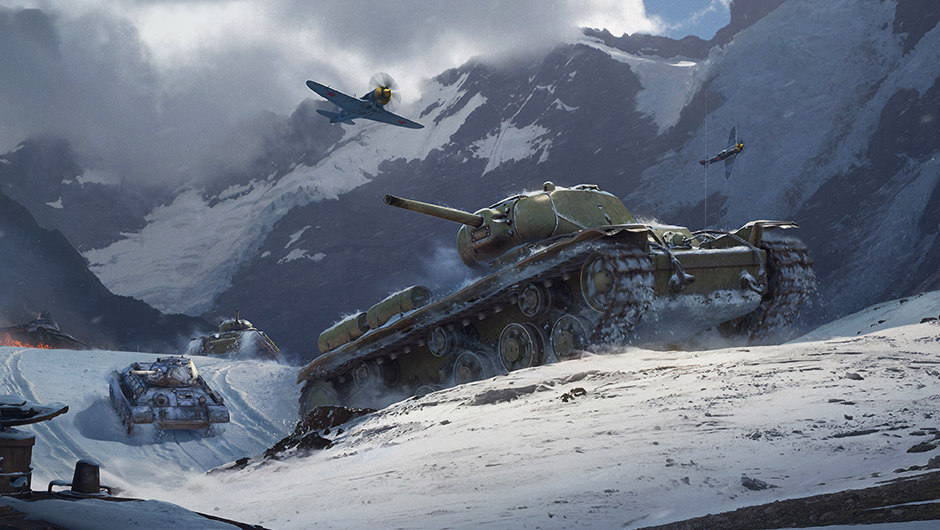
In Pages of History this month, you will find yourself at the center of events that took place in various theaters of war. From Leningrad and Khafji, to the Philippines and East Prussia: participate in battles while using vehicles linked to these historic battles and get some prizes!
From January 1st until January 31st, you will be able to participate in 8 tasks consecutively. Completing each task will grant you a trophy with a reward, completing all of the tasks will earn you a unique player icon!
Pyotr Pilyutov was a Soviet ace who fought throughout World War 2. In total, he took part in 74 aerial battles and shot down 15 enemy aircraft. Pilyutov fought on the Leningrad Front, defending the besieged city. On February 10th, 1943, shortly after the breakthrough of the siege, Pilyutov was awarded the title of Hero of the Soviet Union. After the war, his name was immortalized in the museum-diorama "Breakthrough of the Siege of Leningrad."
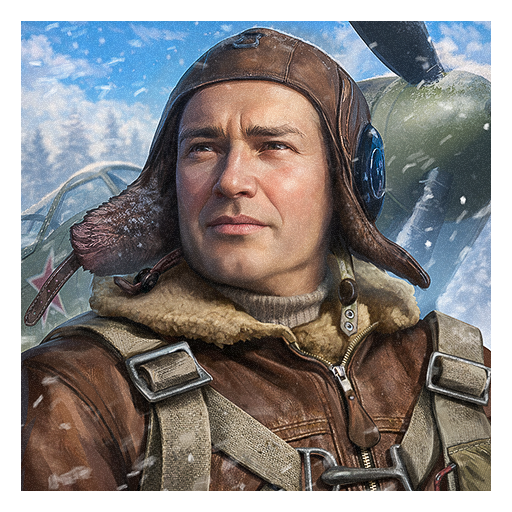
You can purchase this profile icon for Golden Eagles until without completing tasks. To find it, go to your Nickname → Achievements → Pages of History. The option to purchase this achievement will soon be available in the game client.
Trophy reward for each task
Completing each individual task will give you a trophy with one of the following rewards:
- 20-50% RP booster for 3-10 battles;
- 20-50% SL booster for 3-10 battles;
- 3-5 universal backups;
- Premium account for 1 day;
- A random ground vehicle camouflage (out of those that can currently be unlocked or purchased with Golden Eagles).
Other terms
- Tasks are available from 11:00 GMT until 11:30 GMT on the final day of each task.
- Tasks can be completed in random battles except for “Assault” mode.
You can read a detailed description of which task is for which day and your overall progress by going to your Nickname → Achievements → Pages of History.
Calendar
January 1st — January 4th
On the morning of January 1st, 1945, the Luftwaffe conducted its last major operation. It launched a massive strike with fighter-bombers on Allied airfields, hoping to gain air superiority. The operation was conducted in total secrecy, and their own anti-aircraft gunners shot down German planes more than once. The Allies quickly recovered from their losses, while the Luftwaffe lost too many pilots and could not recover by the end of the war.
January 4th — January 7th
On January 5th, 1981, the Iranian army attempted to encircle the Iraqi mechanized brigades that had invaded the country — without sufficient reconnaissance, engineering support, or coordination with infantry. The Iraqis knew about the operation in advance and, having lured the Iranian forces into a trap, defeated them easily.
January 8th — January 11th
On January 9th, 1945, US troops, under continuous kamikaze attacks, initiated an operation on Luzon — the largest island of the Philippine archipelago. 175,000 soldiers landed on the island and engaged the Japanese garrison. Manila was liberated by early March, but fighting continued until the declaration of surrender on August 15th.
January 12th — January 15th
As part of the Rhine crossing preparations in 1945, the Allies conducted an operation to clear the Roer Triangle. The Allies advanced slowly, suffering few losses, and within two weeks by the end of January, had achieved their objectives.
January 16th — January 19th
On January 18th, 1943, during Operation Iskra, the siege of Leningrad was broken. The city was reconnected with the rest of the country by a land route, replacing the ice crossing — the "Road of Life". As early as February 6th, trains began to run on the hastily built railway, and Leningrad began to receive supplies in much larger volumes.
January 20th — January 23rd
On January 22nd, the Allies conducted a daring amphibious operation on the coast of the Tyrrhenian Sea, landing behind the impregnable fortress of Monte Cassino at Anzio. They did not take advantage of the element of surprise. Instead of advancing into the enemy's rear, they began to dig in. As a result, the Germans easily surrounded the Allies at Anzio and shelled them until the summer, when the fall of Rome forced Germany to retreat.
January 24th — January 27th
As a result of an operation conducted by the Red Army in late winter 1945, the Wehrmacht's 4th Army was surrounded in East Prussia near the towns of Braunsberg and Heiligenbeil. As a result of the offensive at the end of March, the army was completely destroyed.
January 28th – January 31st
Between January 30th and 31st, 1991, the Persian Gulf War moved into the territory of Saudi Arabia. On the 30th, Iraqi troops occupied the border town of Khafji, and the international coalition drove them out within 24 hours thanks to air superiority. Iraqi forces lost dozens of armored vehicles while retreating to Kuwait.



Comments (10)
Comments will be premoderatedCan we get a non-Soviet ace for once? I mean, even France would do.
Last three Pages of History heroes were non-sovites. What do you meany "for once"?
Can't wait for conflicts after year 2000, would be nice to use modern vehicles for these achievements
Can we have Axis pilots at least once? We have Saburo Sakai as profile icon, why not others?
It would be a shame if we didn't start another year with gloryfing more russian perfection!
Would be nice to get a Japanese ace/noticeable person. I know Germany doesn't get any because of the associations. But Japan doesn't have the same baggage, neither does Italy!
Oh!.....
That's a pretty nice looking picture for a icon. Pretty handsome man I might say and that's because he has a really close almost dead on similarity of my face... LoL they be taking pictures of me when I'm not looking, dang paparazzi they are everywhere. 🥸...... 😎 Now I'm going to have to get that profile picture.
One day we will get Colonel De Gaulle. And by Meaning Colonel i'm true as before becoming a general he was a tank commander colonel.
When are the xmas pack sales coming to xbox? I would like to buy something.
Submit a complaint