
- For PC
- For MAC
- For Linux
- OS: Windows 10 (64 bit)
- Processor: Dual-Core 2.2 GHz
- Memory: 4GB
- Video Card: DirectX 11 level video card: AMD Radeon 77XX / NVIDIA GeForce GTX 660. The minimum supported resolution for the game is 720p.
- Network: Broadband Internet connection
- Hard Drive: 23.1 GB (Minimal client)
- OS: Windows 10/11 (64 bit)
- Processor: Intel Core i5 or Ryzen 5 3600 and better
- Memory: 16 GB and more
- Video Card: DirectX 11 level video card or higher and drivers: Nvidia GeForce 1060 and higher, Radeon RX 570 and higher
- Network: Broadband Internet connection
- Hard Drive: 75.9 GB (Full client)
- OS: Mac OS Big Sur 11.0 or newer
- Processor: Core i5, minimum 2.2GHz (Intel Xeon is not supported)
- Memory: 6 GB
- Video Card: Intel Iris Pro 5200 (Mac), or analog from AMD/Nvidia for Mac. Minimum supported resolution for the game is 720p with Metal support.
- Network: Broadband Internet connection
- Hard Drive: 22.1 GB (Minimal client)
- OS: Mac OS Big Sur 11.0 or newer
- Processor: Core i7 (Intel Xeon is not supported)
- Memory: 8 GB
- Video Card: Radeon Vega II or higher with Metal support.
- Network: Broadband Internet connection
- Hard Drive: 62.2 GB (Full client)
- OS: Most modern 64bit Linux distributions
- Processor: Dual-Core 2.4 GHz
- Memory: 4 GB
- Video Card: NVIDIA 660 with latest proprietary drivers (not older than 6 months) / similar AMD with latest proprietary drivers (not older than 6 months; the minimum supported resolution for the game is 720p) with Vulkan support.
- Network: Broadband Internet connection
- Hard Drive: 22.1 GB (Minimal client)
- OS: Ubuntu 20.04 64bit
- Processor: Intel Core i7
- Memory: 16 GB
- Video Card: NVIDIA 1060 with latest proprietary drivers (not older than 6 months) / similar AMD (Radeon RX 570) with latest proprietary drivers (not older than 6 months) with Vulkan support.
- Network: Broadband Internet connection
- Hard Drive: 62.2 GB (Full client)
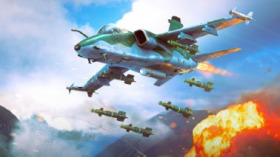
The two-seat training variant of the Hawk series jet adapted for ground attack swoops into the next major update!
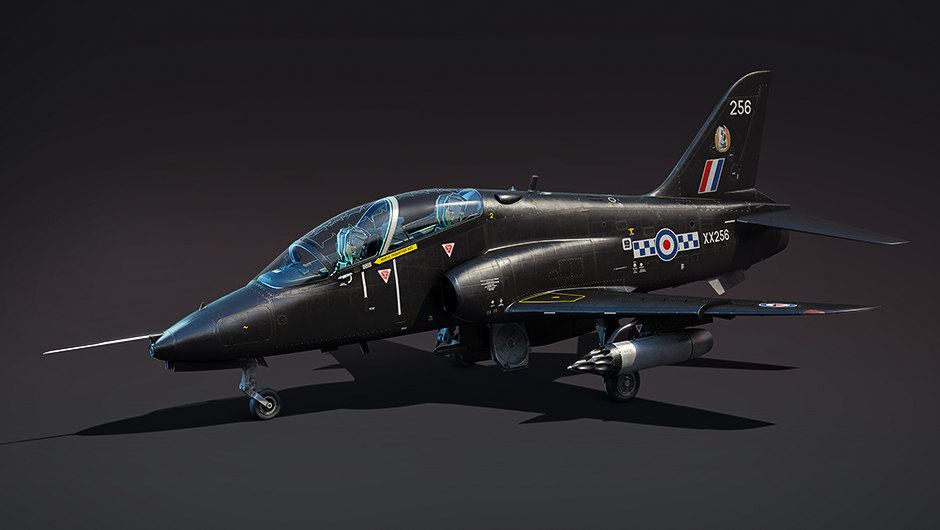
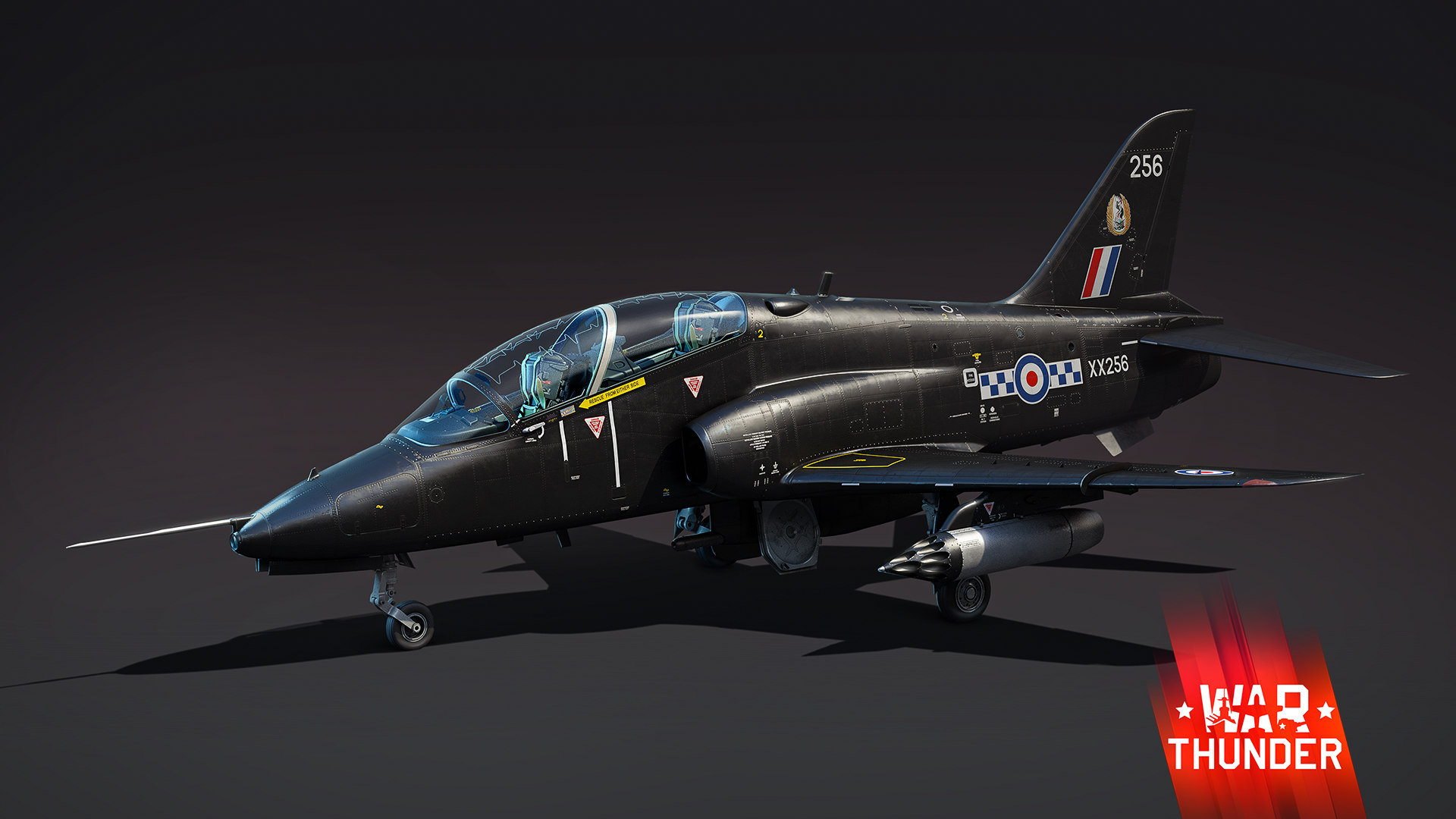
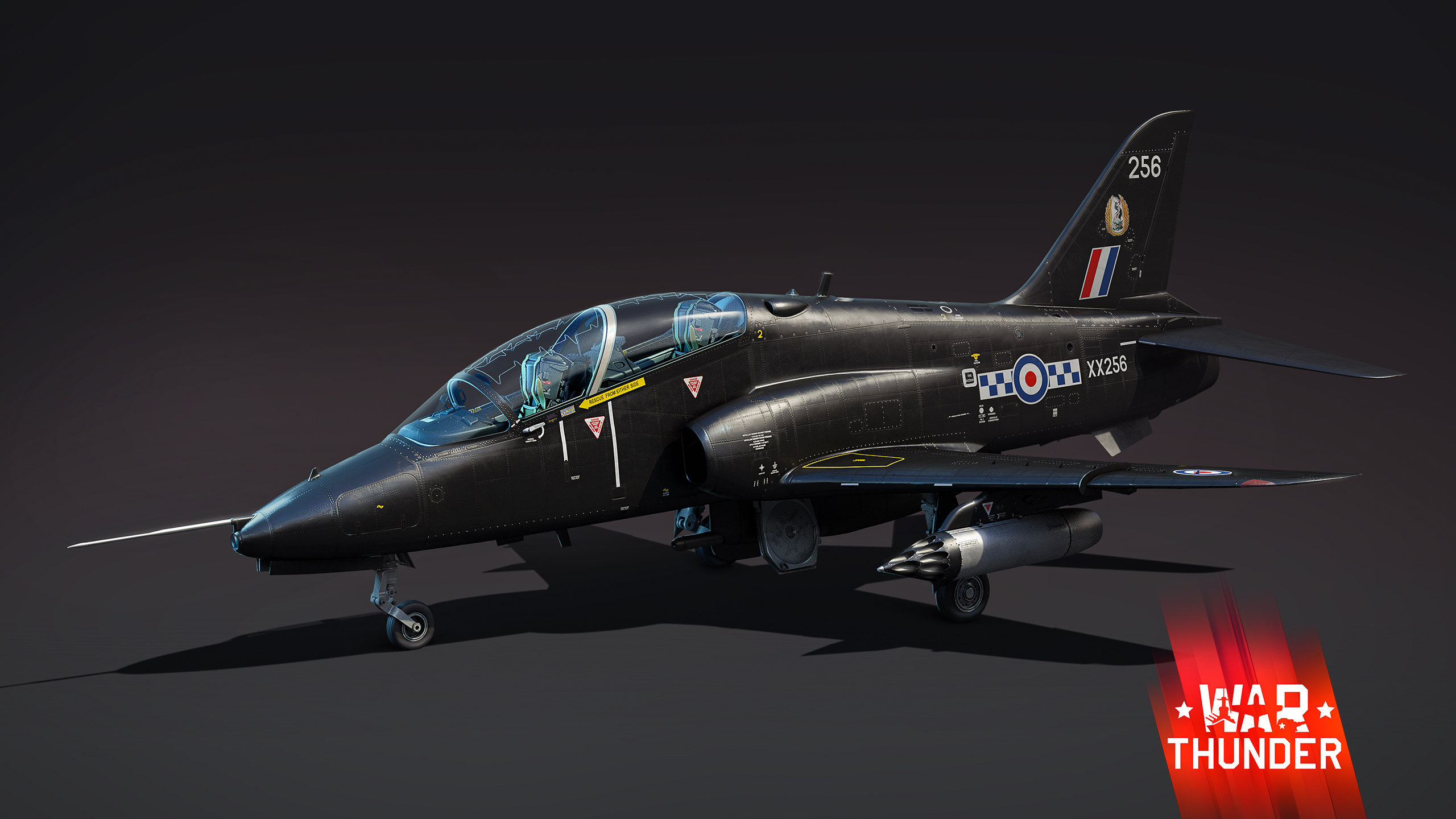
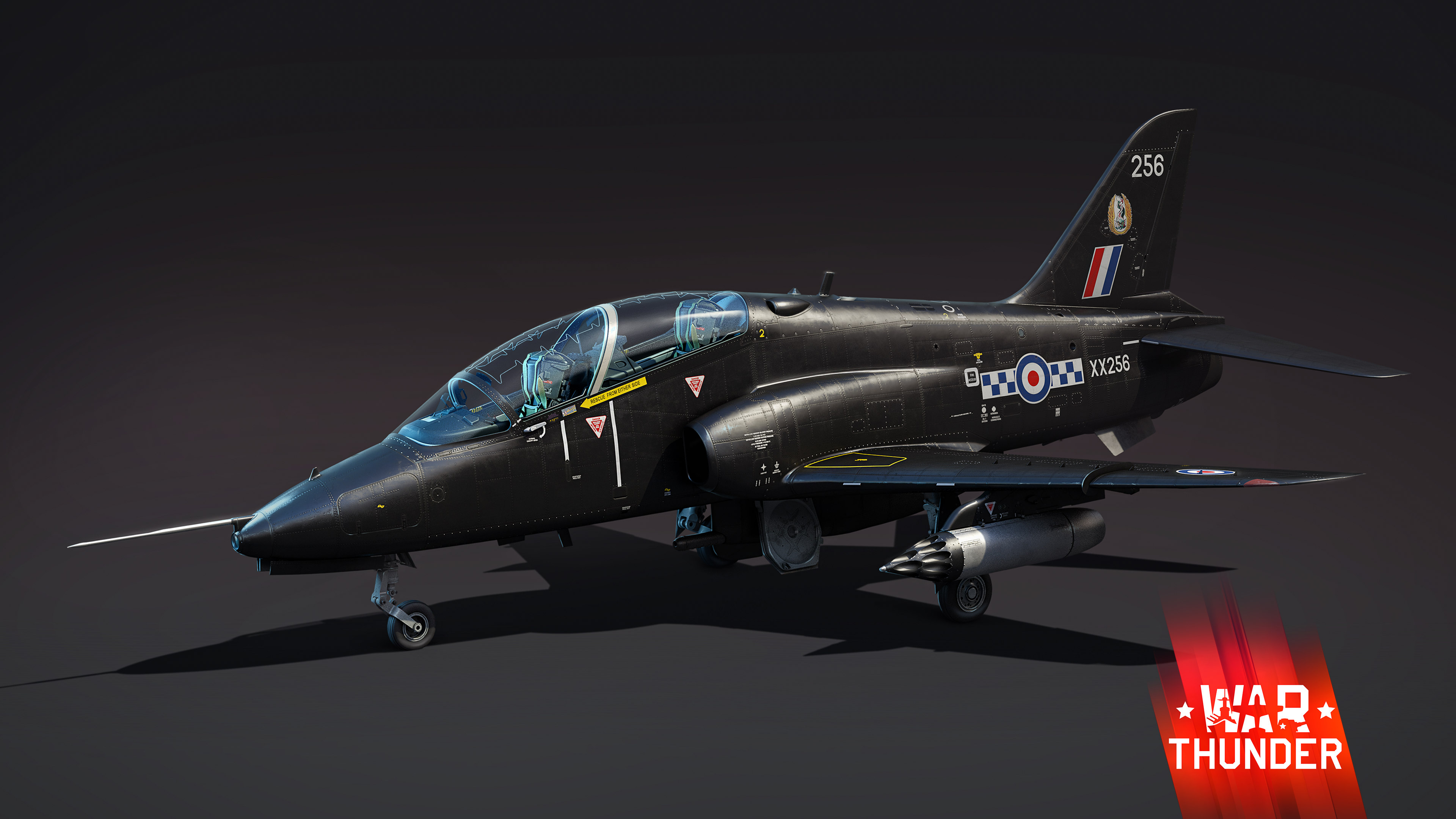
- Hawk T Mk1A (FRP) (Great Britain, Rank V)
- Premium account for 15 days
- 2000 Golden Eagles
- unique "Trustworthy Teacher" title
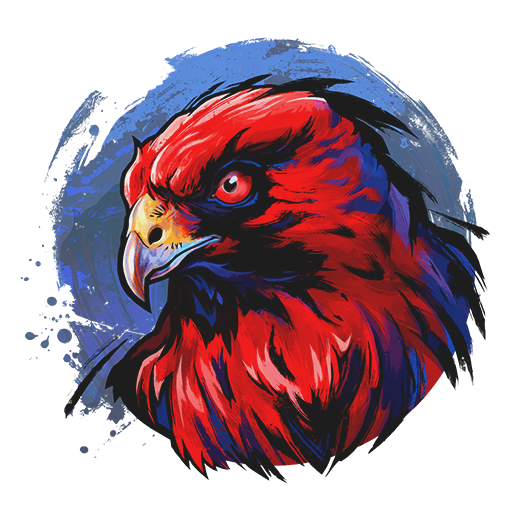
- unique "Red goshawk" decal
- unique No. 208 Squadron golden demo camouflage - RAF Valley
Hawk T Mk1A: A Strike Aircraft for Great Britain at Rank V
At a glance:
- Excellent low speed handling and agility
- Solid selection of anti-tank ordinance
- Subsonic
- No guided weaponry or air-to-air missiles
Introducing the Hawk T Mk1A!
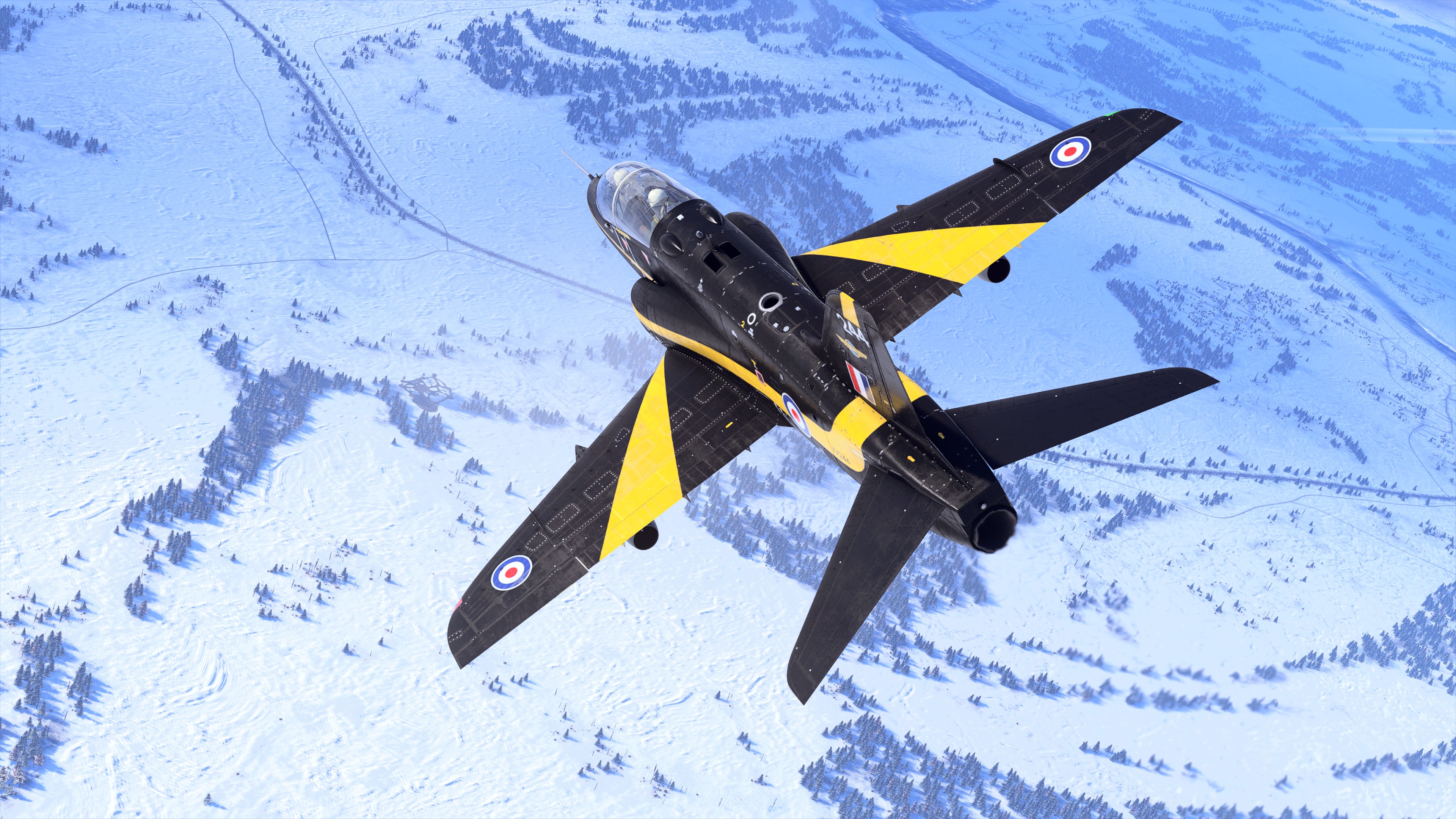
This major update brings another requested variant of the British Hawk series to the game in two versions for pilots to enjoy. A researchable variant, based on the slightly earlier version of the Hawk and a premium variant with the later tail design. Functionally, these aircraft are identical in terms of performance and loadout. Just representing the Hawk T.1 at different stages, with the premium variant showcasing unique display aircraft liveries! This two-seat version of the Hawk began life as a training aircraft, before being adapted for the ground attack role. Let’s find out more about how it will perform in the game!
Using the Hawk T Mk1A in Battle
Air-to-ground combat is where the Hawk T Mk1A shines. A centrally mounted 30 mm ADEN cannon pod on the underside of the fuselage allows for precision fire on lighter targets, while wing stations can be loaded with up to 36 SNEB rockets or several combinations of bomb loadouts depending on the mission requirement. The Hawk has excellent agility and handling at a range of speeds, but particularly at lower levels. This means you can approach the battlefield at very low height, sneak up and surprise enemies with precision and quickly make an exit before repositioning for a second pass. Unlike several lower rank jet attackers, the Hawk’s controllability is one of its key aspects. As it lacks any RWR or countermeasures, you’ll need to be more vigilant for enemy air defenses and hostile aircraft.
Unlike its 200 series successors, this earlier model was more focused on ground attack and support. Its lack of guided ordinance means it will be possible to include it in much lower Battle Rating lineups, supporting your Centurions, Chieftains and other Rank V and VI ground vehicles from above. As it lacks any air-to-air missiles, its best to avoid engagements with other aircraft where possible, however its centrally mounted 30 mm ADEN cannon can still be used for those scenarios when pressed.
Feature Spotlight: An Agile Hawk
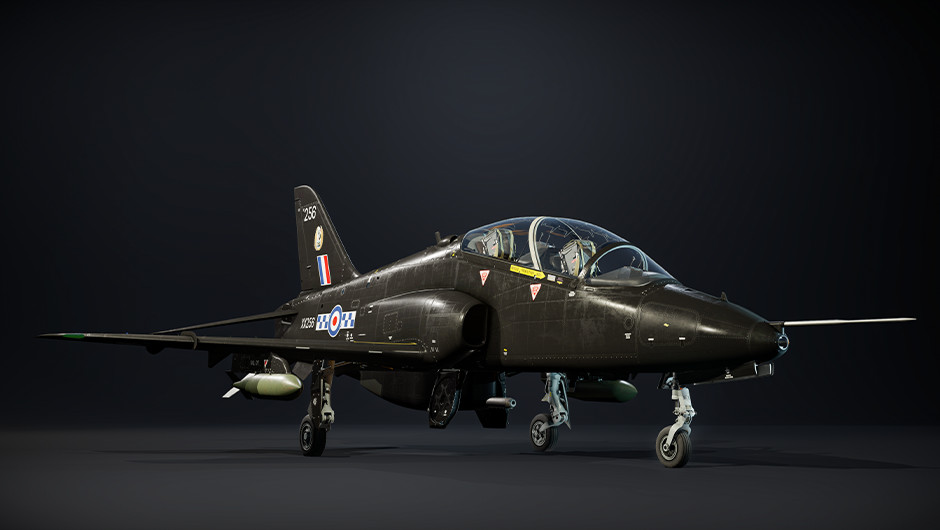
It’s no surprise that, given the Hawk features in so many display teams all over the world, its agility, controllability and overall handling are among its best qualities. While many other jets at and around its Battle Rating may feature more firepower, the Hawk is more agile than most. It doesn’t take too long to get up to speed, and once it’s there, it retains it well despite any maneuvers you may put it through. As an attack aircraft, this is key when operating low and close to danger, as you’ll often need to quickly dodge in and out of terrain cover and features due to a lack of RWR and countermeasures. The Hawk’s small profile and flight characteristics make it perfect for the role of close air support. The added advantage of a second seat and pilot of course means it’s also that tad more survivable, as the loss of the pilot doesn’t immediately take it out of action.
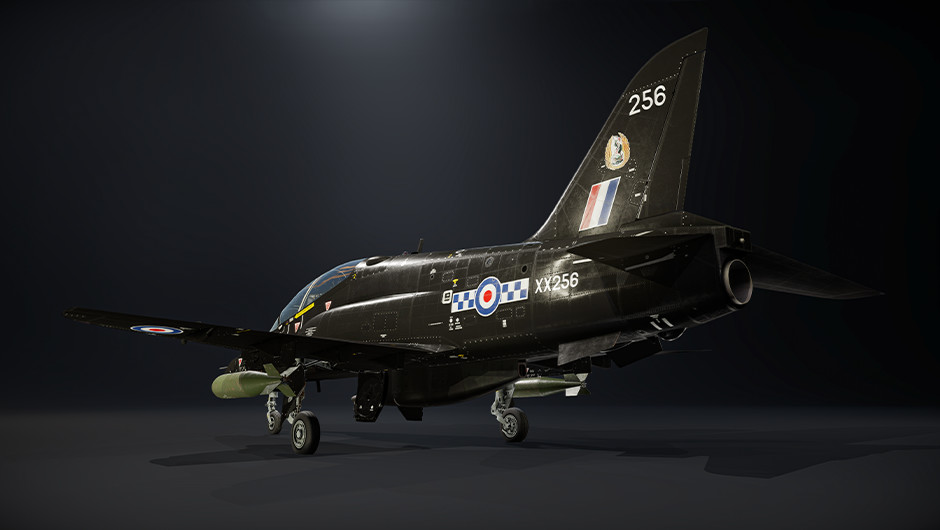
Developer comment: We’ve made the decision not to introduce the AIM-9G/L armament of the Hawk T Mk1A in order to keep it at a reasonable Battle Rating for its flight performance and loadouts. This means it will be able to slot nicely into the 7.7 - 9.0 Battle Rating range and be useful for a number of lineups in Ground Realistic battles too. As the aircraft lacks countermeasures of any kind, an RWR and does not have the flight performance to justify it, giving the aircraft any kind of air-to-air missiles would simply move it to Battle Rating ranges where its advantages are removed. So much like the L-39, Alpha Jet and Yak-130, this variant will be a dedicated lower Battle Rating jet attacker, with the later Hawk 200 and Hawk 200 RDA available to use more in the fighter attack role.
▼
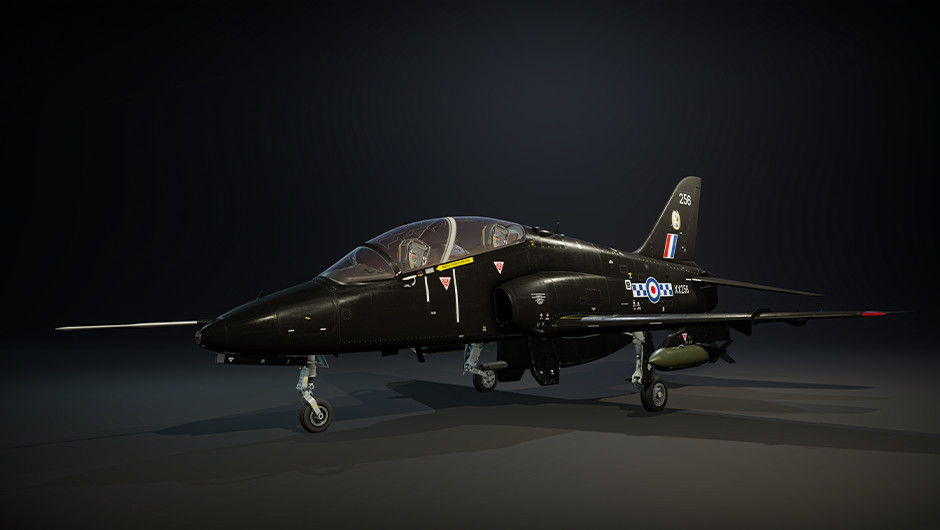
Originally produced by Hawker Siddeley, later BAE, the Hawk came from the need to replace the RAFs aging Gnat fleet of jet trainer aircraft with something more suitable for the times. The Jaguar had been intended for this initially, but it proved too complex for trainee pilots. Taking to the skies initially in 1974, the Hawk was privately funded in anticipation of RAF interest and was adopted into service initially as the T.1 variant just two years later initially as an advanced trainer. It features excellent handling at low speed and low level, as well as its agility lead to further adaptations consisting of the addition of an ADEN gunpod and AIM-9L Sidewinder missiles, with the intention of allowing the Hawk to become a dual use trainer / attacker to replace the Hawker Hunter too. The RAF’s lead display team, the Red Arrows famously adopted the Hawk in 1979 and still fly the aircraft today after the other T.1 airframes in the RAF were retired. Most RAF fighter pilots of the last 50 years have trained in the Hawk T.1 or its later T.2 derivative.
The Hawk was a hugely successful export platform too, with even the US adopting it for the US Navy in the 1980s under a modified version designated the T-45 Goshawk, which is still in service today. The Mk 50 and 60 series were also generated specifically for export, offering both an advanced training aircraft and limited fighter attack capabilities to a number of nations including Finland, Switzerland, Korea, United Arab Emirates, Saudi Arabia, Indonesia and many other nations. The Hawk also went on to be further improved into the advanced Hawk 100 and 200 series.
That’s all for today’s lesson! We hope you learned a lot about what these latest Hawks bring to the classroom for all aspiring jet pilots. Stay tuned for more of what’s to come in the next major update to War Thunder!
Please note that this vehicle’s characteristics may be changed before it is added to the game.

Comments (18)
Comments will be premoderatedWill we get a Red Arrows camo??
One of the two Hawks coming this major are currently planned to receive one (most likely the early one). But its still WIP / Subject to change.
IMO, it would be rude not to!
Any chance for Germany (Switzerland), Japan (Indonesia) and Sweden (Finland) to receive their Hawks as well in the near future? ;-)
Can we get the HEDP ammo the French Alpha Jet got? DEFA/ADEN are ammo compatible and it would be a nice addition for its limited ground attack ability.
Has a final decision been made on whether these Hawks will feature the outer pylons/ordnance options that've been reported as well? As this is a key part of determining how effective this aircraft will be.
Hey. Based on all the current information, its looking likely that Hawk T.1As didn't have these modifications. Both the cockpit switches and wiring suggests more extensive modification was required other than just mounting them. So its not clear that a normal Hawk T.1A could without non-standard modification.
Smin1080p_WT, Hi Smin, thanks for the reply. If it is deemed, that these are fundamental variations that differ from the current implentations, is it possible to adjust the existing models to match those specifications, to allow the expanded arsenal? As within the planned BR bracket, the current weaponry (or rather lack-there-of) will substantially restrict the utility of the vehicle in an environment satured with radar-AAs. And leave this interesting pair highly overshadowed by its peers.
Hopefully we will also see a Finnish Hawk in the future!
This one seems pretty finished to me ;)
Really looking forward to this aircraft, spent many years watching the fly from Brawdy on my holidays. Two questions: 1. Is there any chance they will be able to equip the outer wing pylons (never used but could be fitted)?. 2. Will one of them feature the Air Defence Grey Camo, even if the AIM-9s are not an option?
IMMEDIATE purchase with that title ngl
Purchased and can't wait to see it in game. Did spend some time at RAF Valley when in the RAF so be very happy to look at it up close again.
Yep, I'm sold on this one! Been hoping for this variant since the Hawks were announced.
Enjoy
Any chance we might see the US Navy T-45 paint scheme?
Submit a complaint