
- For PC
- For MAC
- For Linux
- OS: Windows 10 (64 bit)
- Processor: Dual-Core 2.2 GHz
- Memory: 4GB
- Video Card: DirectX 11 level video card: AMD Radeon 77XX / NVIDIA GeForce GTX 660. The minimum supported resolution for the game is 720p.
- Network: Broadband Internet connection
- Hard Drive: 23.1 GB (Minimal client)
- OS: Windows 10/11 (64 bit)
- Processor: Intel Core i5 or Ryzen 5 3600 and better
- Memory: 16 GB and more
- Video Card: DirectX 11 level video card or higher and drivers: Nvidia GeForce 1060 and higher, Radeon RX 570 and higher
- Network: Broadband Internet connection
- Hard Drive: 75.9 GB (Full client)
- OS: Mac OS Big Sur 11.0 or newer
- Processor: Core i5, minimum 2.2GHz (Intel Xeon is not supported)
- Memory: 6 GB
- Video Card: Intel Iris Pro 5200 (Mac), or analog from AMD/Nvidia for Mac. Minimum supported resolution for the game is 720p with Metal support.
- Network: Broadband Internet connection
- Hard Drive: 22.1 GB (Minimal client)
- OS: Mac OS Big Sur 11.0 or newer
- Processor: Core i7 (Intel Xeon is not supported)
- Memory: 8 GB
- Video Card: Radeon Vega II or higher with Metal support.
- Network: Broadband Internet connection
- Hard Drive: 62.2 GB (Full client)
- OS: Most modern 64bit Linux distributions
- Processor: Dual-Core 2.4 GHz
- Memory: 4 GB
- Video Card: NVIDIA 660 with latest proprietary drivers (not older than 6 months) / similar AMD with latest proprietary drivers (not older than 6 months; the minimum supported resolution for the game is 720p) with Vulkan support.
- Network: Broadband Internet connection
- Hard Drive: 22.1 GB (Minimal client)
- OS: Ubuntu 20.04 64bit
- Processor: Intel Core i7
- Memory: 16 GB
- Video Card: NVIDIA 1060 with latest proprietary drivers (not older than 6 months) / similar AMD (Radeon RX 570) with latest proprietary drivers (not older than 6 months) with Vulkan support.
- Network: Broadband Internet connection
- Hard Drive: 62.2 GB (Full client)
We’re updating rendering! This will bring interesting new effects to the game, some of which we’ll discuss today.
Snow, dirt and dust on tanks
War Thunder has long had a system that lets ground vehicles get dirty in battle. Tracks kick up dust, dirt and snow, fires leave soot, and crossing a river washes the grime away. But while the physics of how dirt spreads was pretty good, it was not always accurate. Snow on sloped surfaces looked like a milky film, dust spread like a flat beige wash, and different tanks side by side could have completely different cover because of different armor angles, while grain size varied from part to part. In the Eagle’s Shadow major update, we’ve rebuilt the dirt system from scratch.
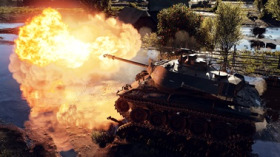
Now, settled snow on armor has a 3D texture; it accumulates and gets thicker during snowfall in solid patches with color instead of just painting over the surface. Dust now has a grainy texture, and mud has a bumpy texture. Previously, dust and mud only settled near the tracks. Light dust now flies farther and settles higher on the hull, while heavy mud stays low. Furthermore, these coatings respond to the vehicle’s actual geometry: rivets, welds, hatch rims and gaps. Snow and dirt accumulate primarily in crevices and shaded corners. Grain size is now almost uniform across all parts and all tanks, so the dirt looks natural on any vehicle. We’ve also implemented a snow melting mechanic! A running engine gradually thaws the snow on the engine deck, radiator grilles, and exhaust pipes, while firing the main gun heats the barrel, causing any snow on it to melt away.
It is important to note that the most expensive operations are performed once at map load. The new dirt system will work on all graphics presets where it was previously available.
Humidity model and new wing vapor effects
Each weather preset in battle now has a new variable called humidity data. The humidity model, together with data on speed, altitude and angle of attack, now determines the nature and intensity of vapor effects in flight. On a dry clear day you will hardly see any vapor, but under a low overcast or over the sea it becomes three times stronger!
To the effects of the transonic cone and LERX vortices, the update adds perhaps the most spectacular effect: wing vapor sheets that arise from a local drop in pressure and temperature. The sheet appears at the critical angle of attack, grows with G and speed, fades toward the trailing edge and thins out at altitude where the air is dry and cold. For variable-sweep aircraft, the vapor sheet turns with the wing, and the vortices follow the changing sweep.
The visuals of air combat have been greatly enhanced and sharp maneuvers feel new. The faster you are and the higher the air humidity, the more vapor you see!
Glints and glow on water
Previously, only the sun could sparkle on the water; light from ship salvos, fires and explosions were not reflected. The water stayed dark even if a searchlight was shining nearby or a wrecked cruiser was blazing on fire. This has now been fixed.
Every light source now has its own reflection. Muzzle flashes, fires, and lamps are now reflected on the water using the same model as the sun, refracting on waves and ripples. The reflection of a burning ship will tell you where she is before you make out the hull. At night, light not only reflects off the water but also spreads beneath it, illuminating the water volume from within.
The new look of naval combat at night or dusk depends on water quality settings. Glints and glow will be enabled on High or Ultra settings; on Medium and Low the rendering remains as before.
Removed stripes at altitude and godrays are back
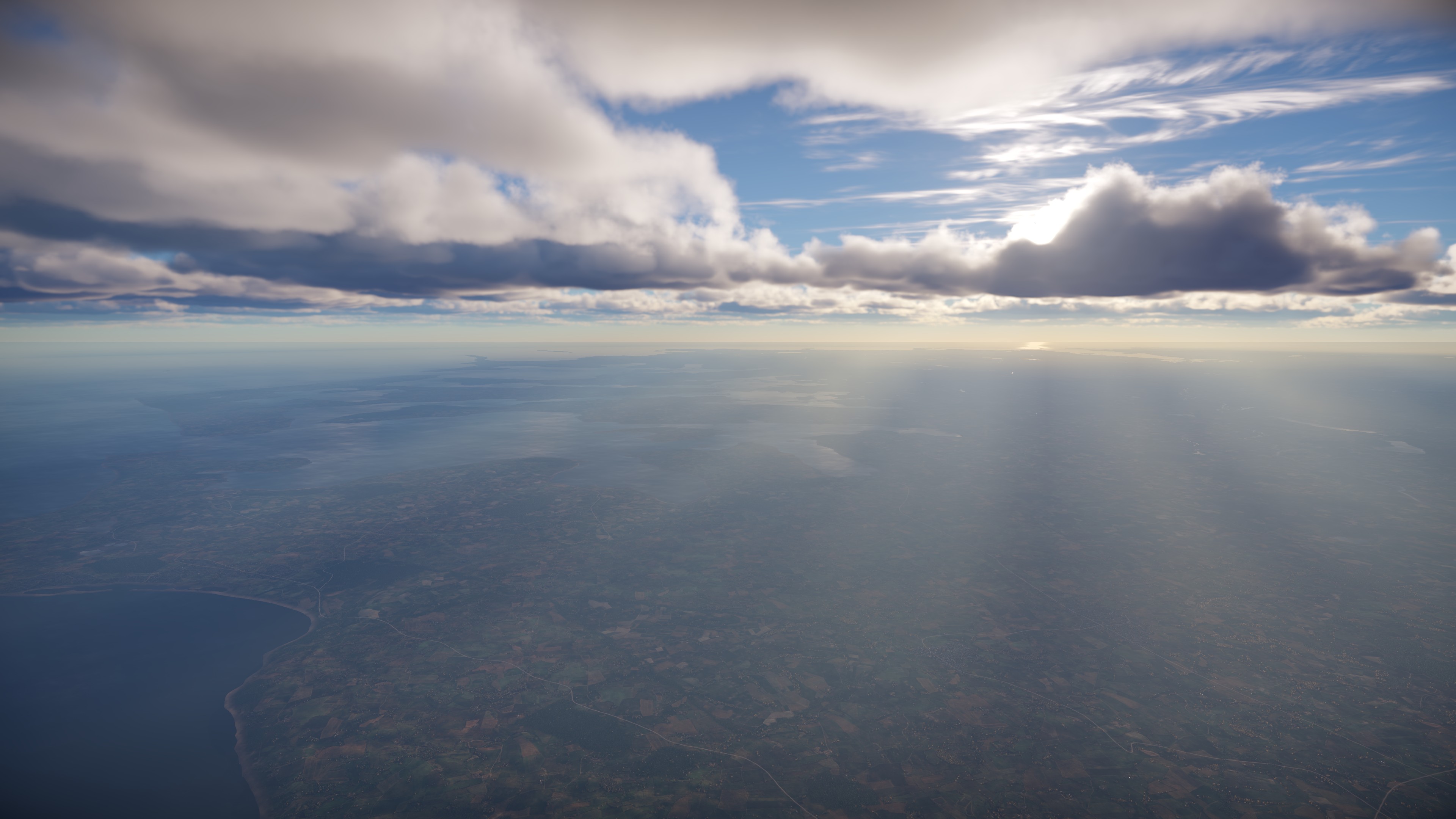
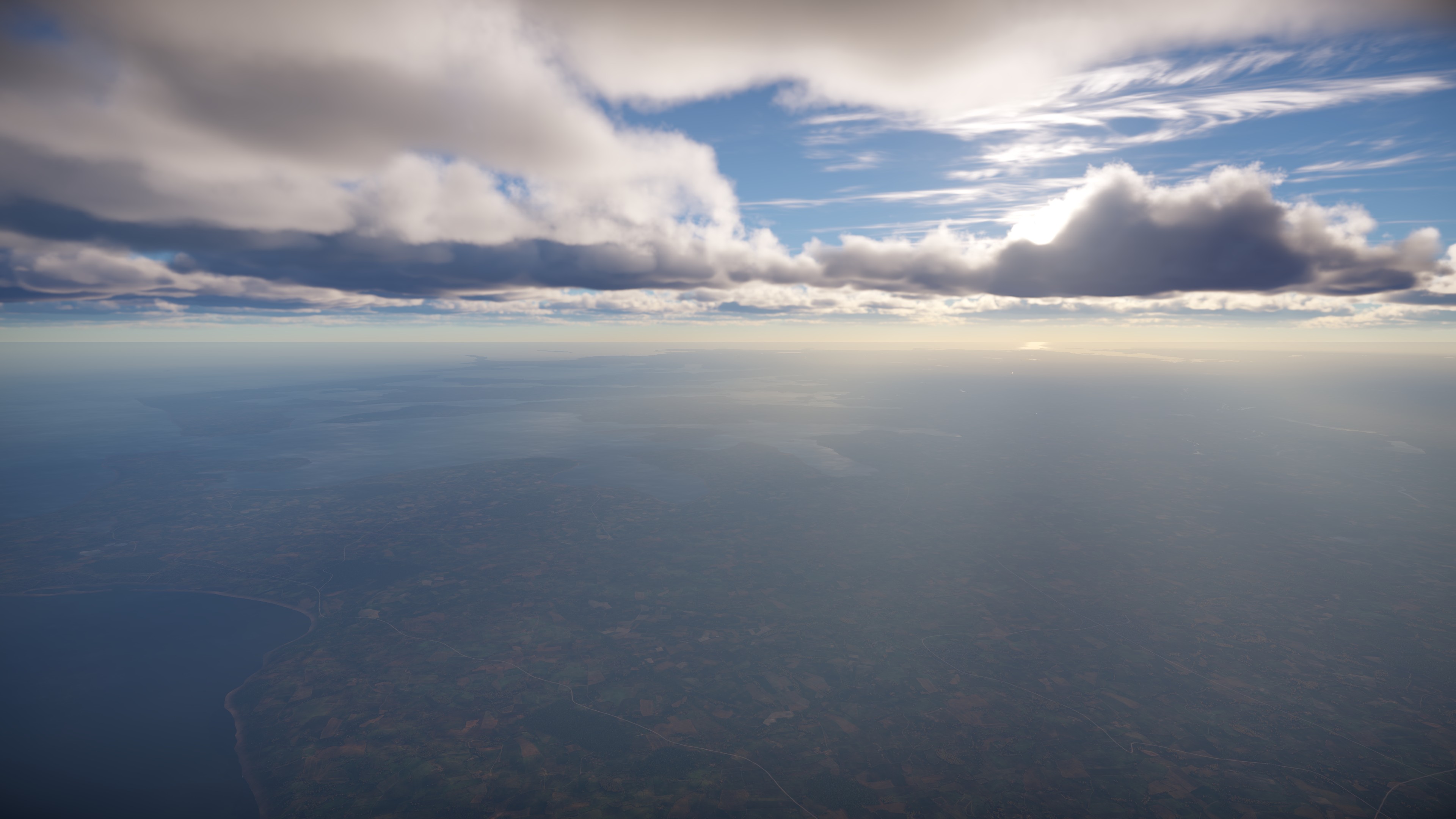
OLD | NEW
Aviation in the game is getting faster and higher, but the old renderer was not designed for such high altitudes. In flights at high altitude, where the entire screen is filled with sky, sea and hazy mist, dark banding could be noticed in the distance. The bands were formed due to the peculiarities of light passing through fog in the old render model. A quick fix to hide the bands was to make the fog blur more intense at high altitude. Well, the bands gone, but so did the crepuscular rays, or godrays: sun shafts passing through clouds, one of the most beautiful sky effects in the game.
In the new renderer version, we decided to deal with the problem properly. Fog and haze are now rendered smoothly and correctly at all altitudes and distances. The horizon line has become sharp, haze over the sea has appeared when looking from high altitude, and the crepuscular rays have returned. The godrays effect will once again be encountered in the game!
Goodbye to repeating clouds!
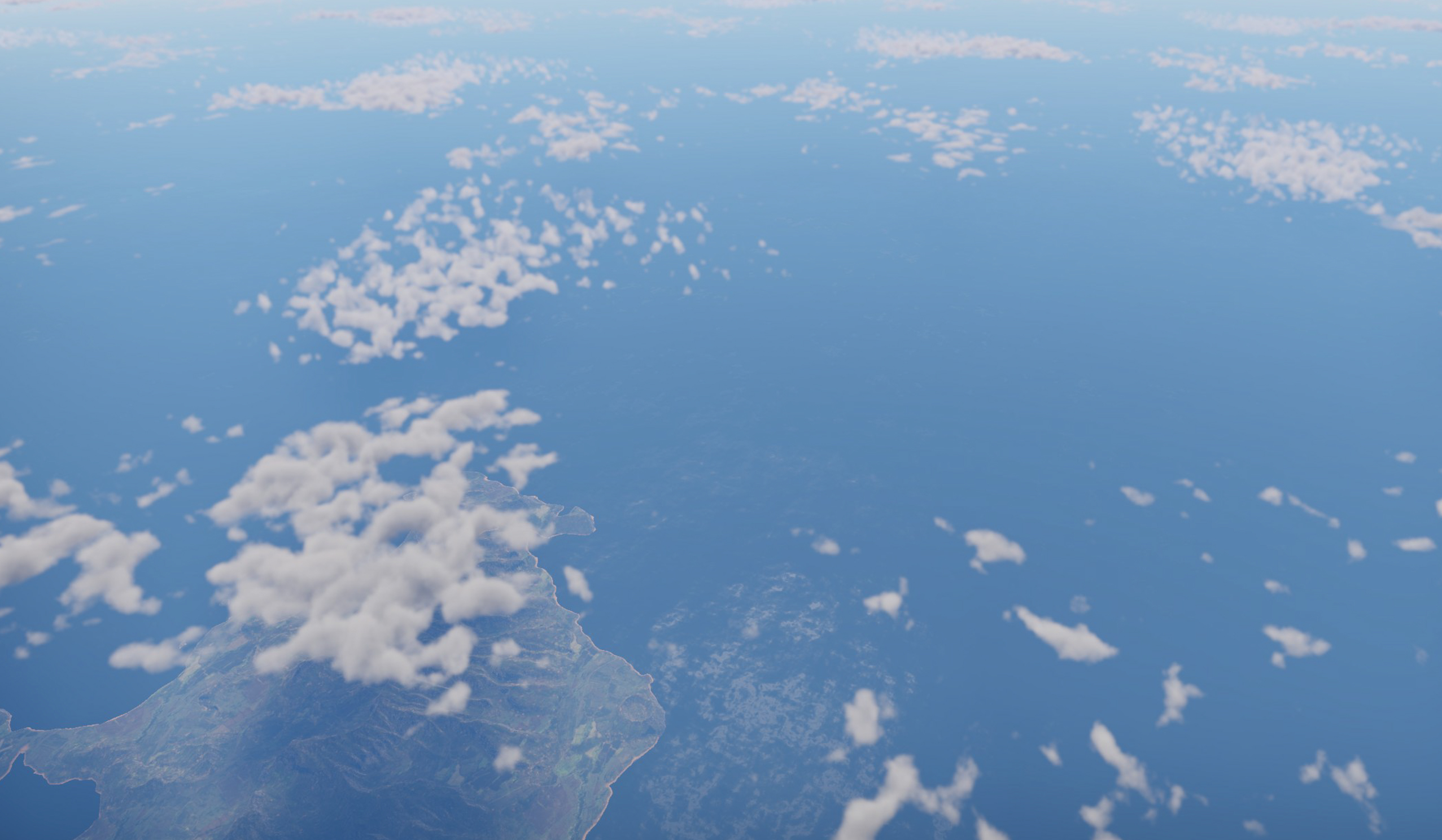
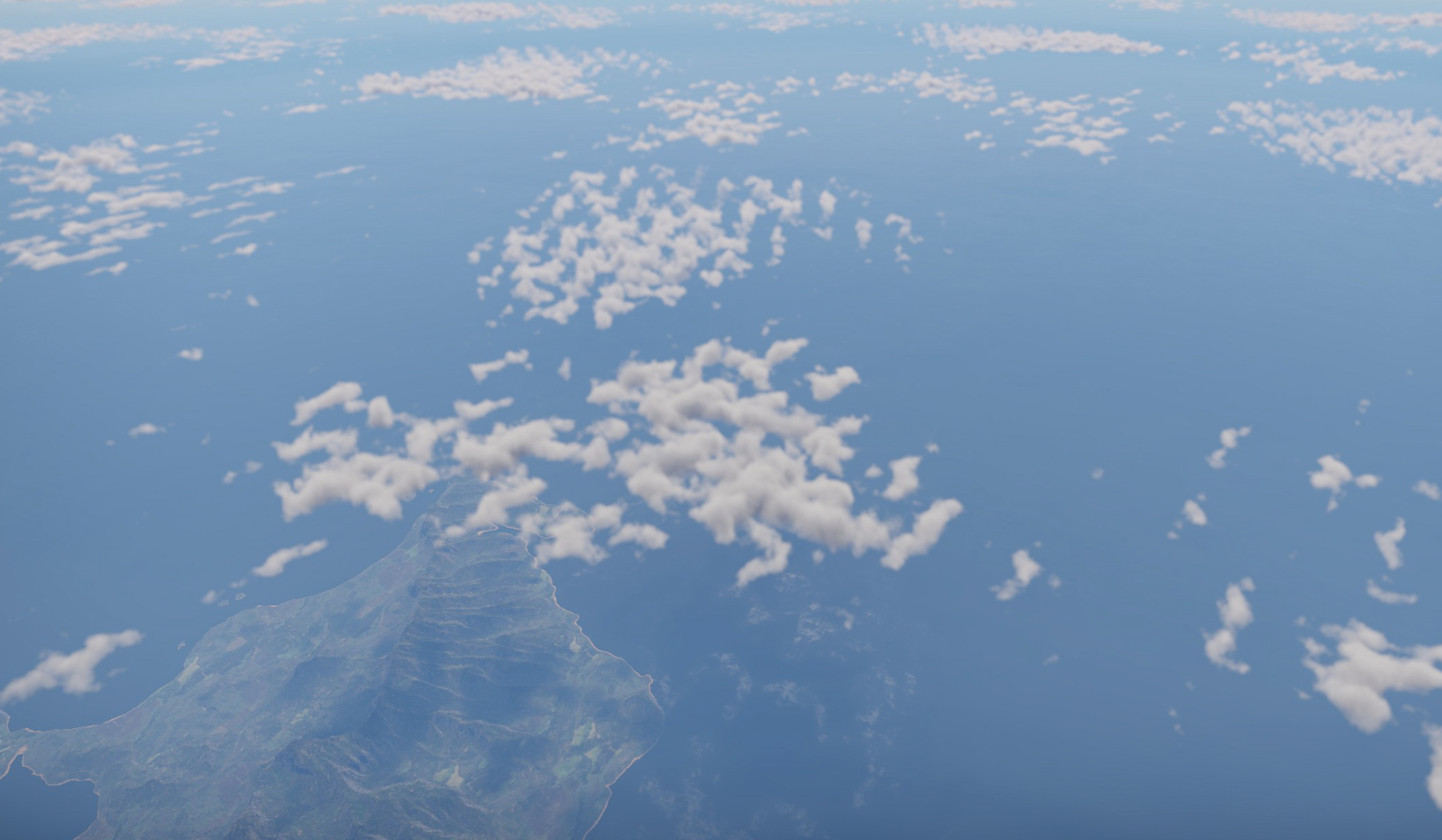
OLD | NEW
Here’s another piece of good news about the sky. In the previous renderer version there was a problem with repeating cloud clusters, which could sometimes be seen in cloudy weather when flying at high altitudes. The cause was the algorithm of cloud formation — the renderer built them from a 3D noise texture laid over the weather map. This texture stretched across the entire sky and the arrangement of bumps and hollows repeated at regular intervals, creating a wallpaper-like pattern. It looked unnatural.
In the Eagle’s Shadow update, every patch of sky gets its own copy of the cloud shape with random offset and rotation, seamlessly blended with its neighbors. The cloud pattern no longer repeats, the sky looks natural on all graphics settings on all platforms, and it does not require additional system resources. Fly high to the sky!
That’s all for now. Soon we will tell you more about the updated War Thunder renderer itself, which will appear in the game with the Eagle's Shadow update. Be back soon!
Comments (1)
Comments will be premoderatedWill these new effects downgrade or degrade performance or graphics quality on consoles?
Submit a complaint