
- For PC
- For MAC
- For Linux
- OS: Windows 10 (64 bit)
- Processor: Dual-Core 2.2 GHz
- Memory: 4GB
- Video Card: DirectX 11 level video card: AMD Radeon 77XX / NVIDIA GeForce GTX 660. The minimum supported resolution for the game is 720p.
- Network: Broadband Internet connection
- Hard Drive: 23.1 GB (Minimal client)
- OS: Windows 10/11 (64 bit)
- Processor: Intel Core i5 or Ryzen 5 3600 and better
- Memory: 16 GB and more
- Video Card: DirectX 11 level video card or higher and drivers: Nvidia GeForce 1060 and higher, Radeon RX 570 and higher
- Network: Broadband Internet connection
- Hard Drive: 75.9 GB (Full client)
- OS: Mac OS Big Sur 11.0 or newer
- Processor: Core i5, minimum 2.2GHz (Intel Xeon is not supported)
- Memory: 6 GB
- Video Card: Intel Iris Pro 5200 (Mac), or analog from AMD/Nvidia for Mac. Minimum supported resolution for the game is 720p with Metal support.
- Network: Broadband Internet connection
- Hard Drive: 22.1 GB (Minimal client)
- OS: Mac OS Big Sur 11.0 or newer
- Processor: Core i7 (Intel Xeon is not supported)
- Memory: 8 GB
- Video Card: Radeon Vega II or higher with Metal support.
- Network: Broadband Internet connection
- Hard Drive: 62.2 GB (Full client)
- OS: Most modern 64bit Linux distributions
- Processor: Dual-Core 2.4 GHz
- Memory: 4 GB
- Video Card: NVIDIA 660 with latest proprietary drivers (not older than 6 months) / similar AMD with latest proprietary drivers (not older than 6 months; the minimum supported resolution for the game is 720p) with Vulkan support.
- Network: Broadband Internet connection
- Hard Drive: 22.1 GB (Minimal client)
- OS: Ubuntu 20.04 64bit
- Processor: Intel Core i7
- Memory: 16 GB
- Video Card: NVIDIA 1060 with latest proprietary drivers (not older than 6 months) / similar AMD (Radeon RX 570) with latest proprietary drivers (not older than 6 months) with Vulkan support.
- Network: Broadband Internet connection
- Hard Drive: 62.2 GB (Full client)
You’ve asked for them, you’ve waited for them, and here they are! In the Heavy Cavalry major update, you’ll have new tools at your disposal for countering anti-aircraft systems: anti-radiation missiles (ARMs) and electronic support measures (ESM) capabilities. As the game continues to add new threats, this type of weaponry is becoming increasingly relevant. New SAM systems have been added, and taking them out requires new tools for the job. Plus, you simply can’t do without anti-radiation missiles in Nuclear Escalation! Let’s dive into what they are and how they work.
Anti-Radiation Missiles (ARMs)
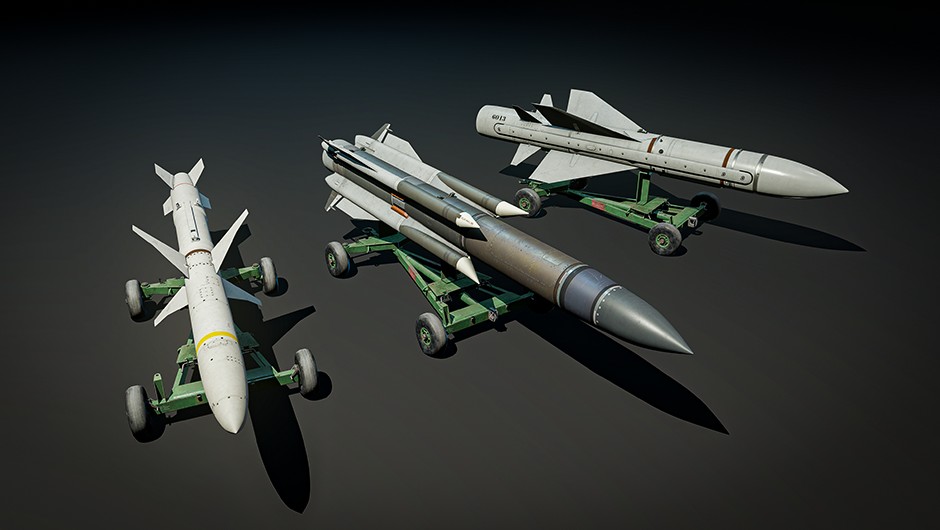
Right, first off let’s start with the Anti-Radiation Missiles (ARMs). These missiles are equipped with a passive radar homing head. This means the enemy radar sends signals, your missile detects that radar signal, and goes to chase the source of it. The source of the radio waves can be either the radar of an SPAA or a ship, or the airborne radar of another aircraft, but this is more of an exception.
Speaking of exceptions, during Operation Desert Storm, an AGM-88 HARM missile struck a low-flying allied B-52G bomber that had its tail radar (used to guide the gun turret) turned on. The aircraft successfully returned to base and was later named “In HARM’s Way”.
Simplified comparison table
Here we have a simple table explaining how SARH and ARH missiles (which are already in the game) work in comparison to the new ARMs.
SARH missiles
Your jet sends a radar signal, which bounces on the target. Your missile detects it and goes to chase it.
ARH missiles
Your missile sends a radar signal, which bounces on the target. Your missile then detects it and goes to chase it.
ARMs (new)
The enemy radar is sending signals. Your missile detects that radar signal, and goes to chase the source of it.
Using ARMs
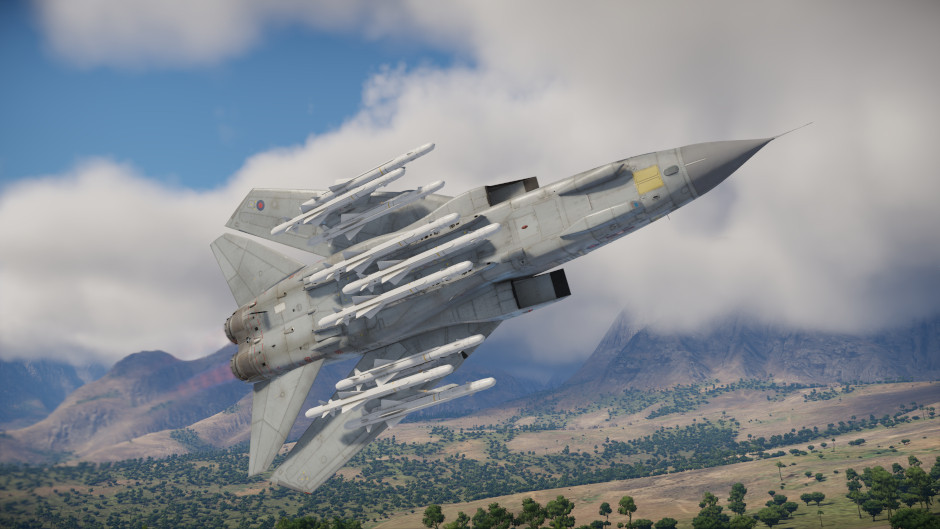
What do you need to know about the specifics of using these missiles? First and foremost, it’s important to remember that their seekers are tuned to detect specific radar bands, designated by letters in the game. The missile simply won’t see a target if it emits radiation of a different wavelength (band). Therefore, you need to “know your enemy” and select missiles based on the range of potential opponents. To help you, the missile stat cards list the wavelengths (radar bands), and on cursor hover, a list of vehicles emitting signals in that range is displayed.
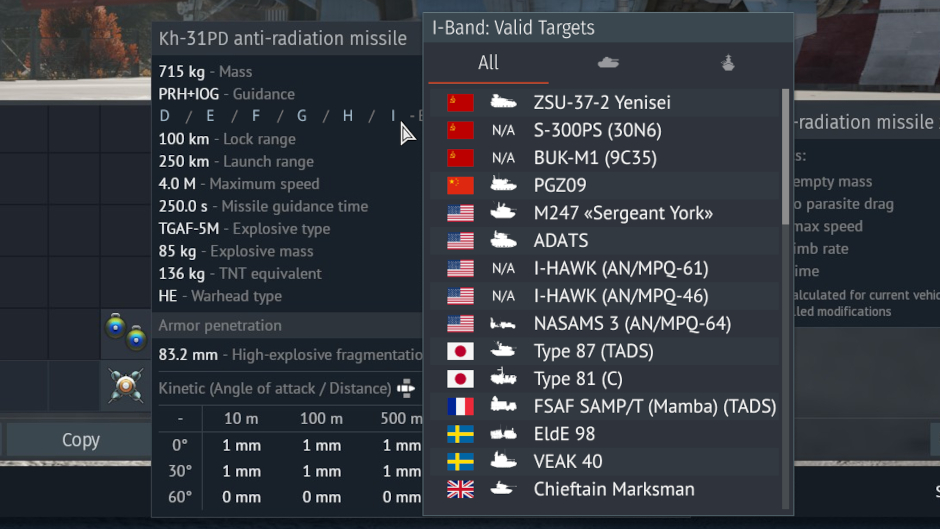
A mockup of the tooltip interface
Another thing to keep in mind is the lethality of ARMs. Due to the intermittent nature of many radar signals and the reflection of waves off the ground and surrounding objects, a direct hit on a target is not always achieved. Many missiles have a proximity fuze, which helps compensate for the lack of accuracy. However, when used, the detonation occurs quite far from the surface, making it difficult to damage armored targets. The game will feature the option to turn off the proximity fuze, but without it, accuracy again becomes a problem.
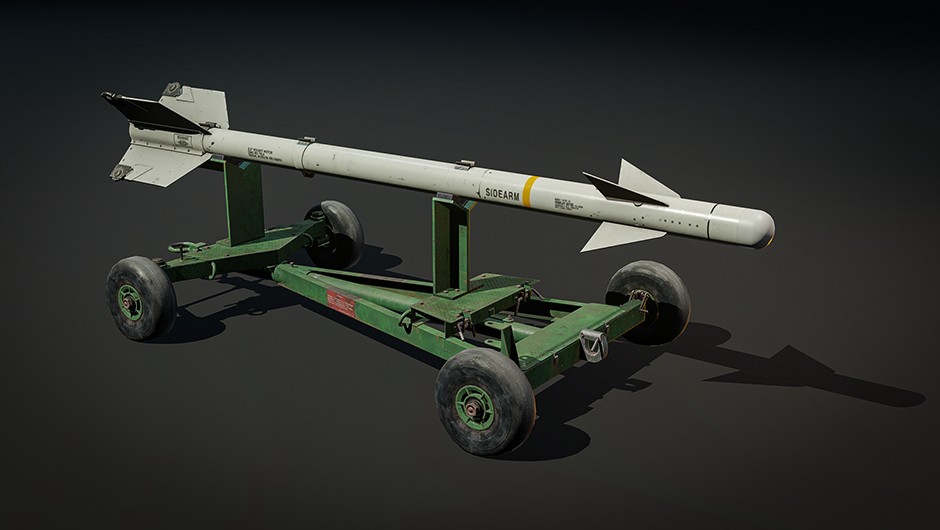
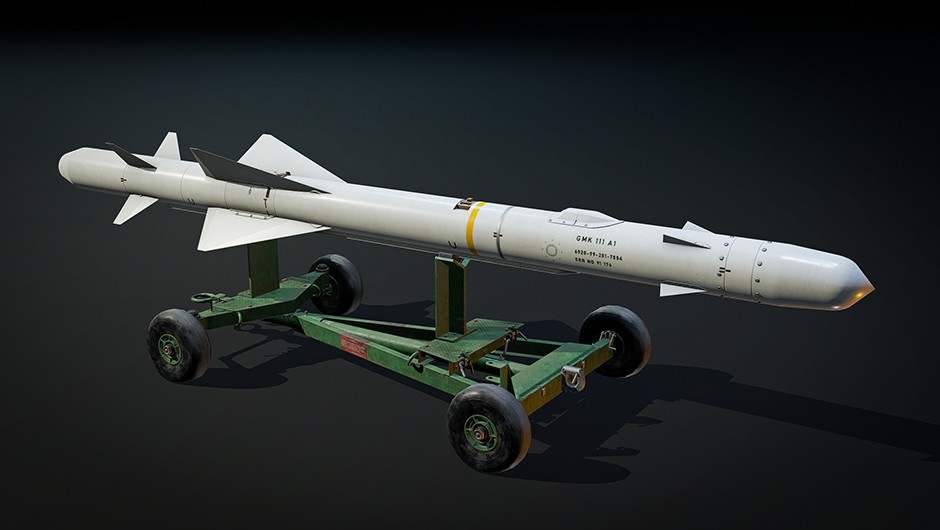
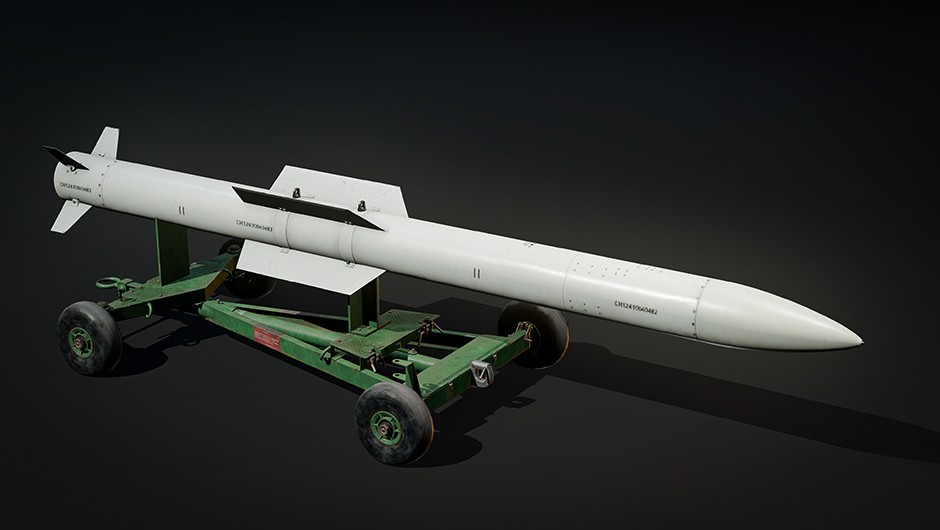
In short, to use ARMs successfully, you’ll need to take the specifics of the situation into account and adapt accordingly. It’s not a “one-click” solution, but rather a highly specialized tool that can be very useful in the right hands.
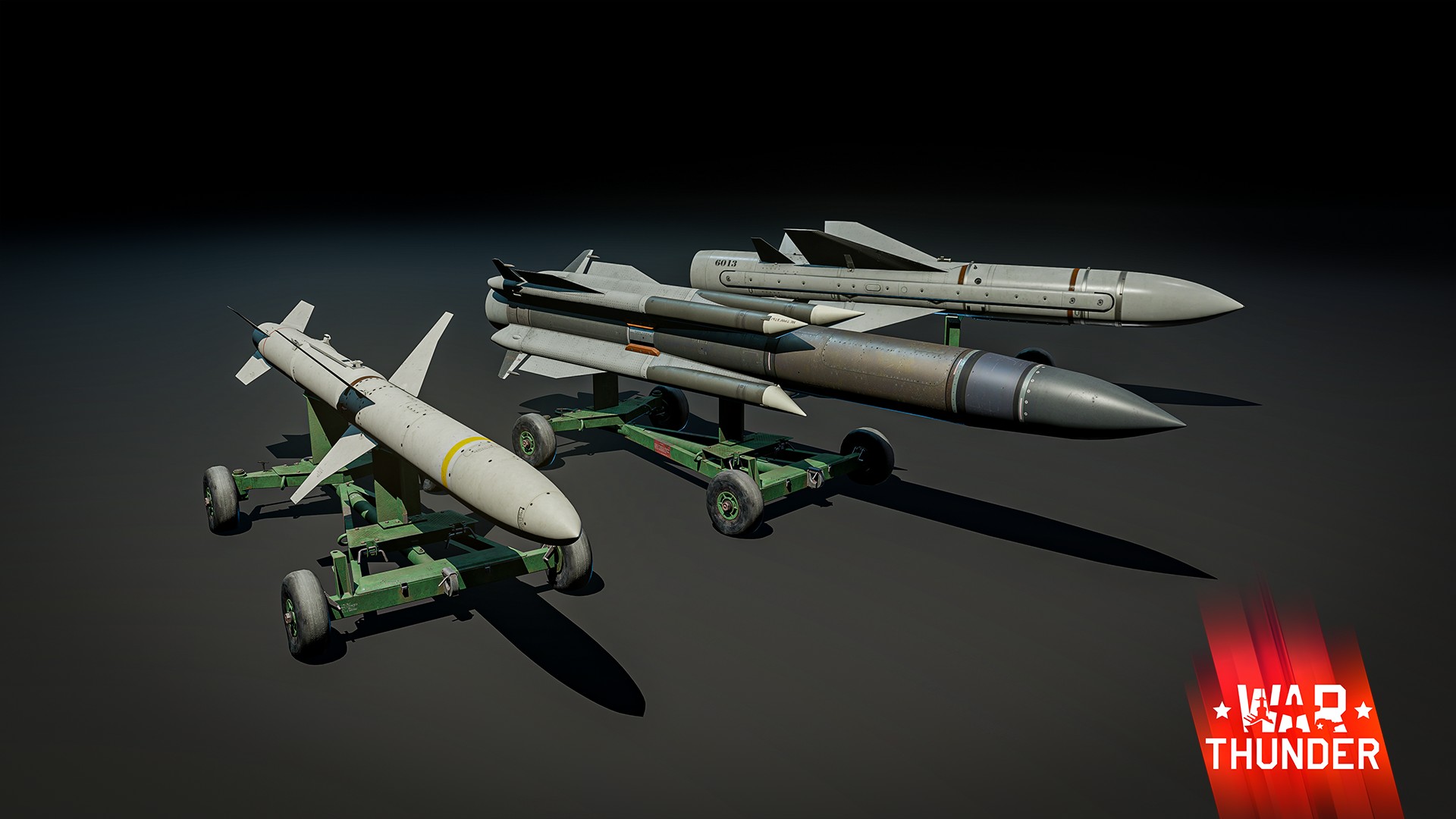
In the “Heavy Cavalry” update, ARM aircraft from all nations will receive new missiles. Among the new additions are:
- The US AGM-88 HARM (versions A and C), the AGM-122 (based on the AIM-9C)
- The Anglo-French AS-37 ARMAT
- The British ALARM
- The Chinese YJ-91, CM-102, and LD-10
- The Soviet Kh-27PS, several versions of the Kh-58, and the Kh-31 family — the first missiles in the game to feature a ramjet engine.
ESM
So we’ve covered the missiles themselves, but how do you launch them? You can simply turn on the seeker and fire a missile at the first target you see, but that’s not always effective. This is where the electronic support measures functionality comes in handy.
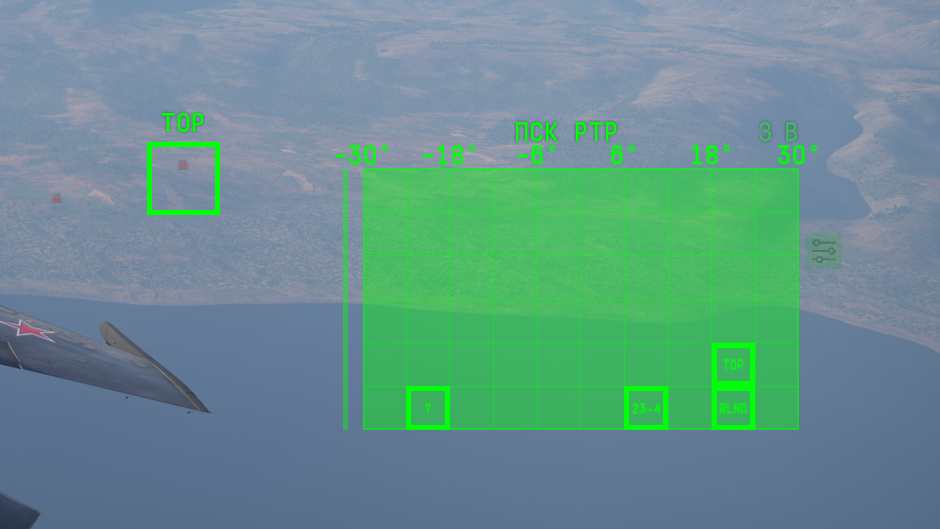
This sector-divided screen, which replaces the radar indicator, displays the signal sources detected by the ESM. All electronic support systems can determine the signal strength and its coordinates, and provide target designation for anti-radiation missiles. However, some can also determine the type of threat. The column for the detected source is selected by azimuth, and the row by signal strength. The lower the signal, the stronger it is. Just like on a radar, on this screen you can select the desired target and fire a missile at it. It’s all quite simple.
Most often, ESM sensors are designed as special pods, or equipped anti-radiation missiles act as such sensors. For example, the AGM-88 HARM has this functionality. However, sometimes electronic support sensors are integrated directly into the aircraft’s systems, allowing them to retain functionality even after all anti-radiation missiles have been fired.
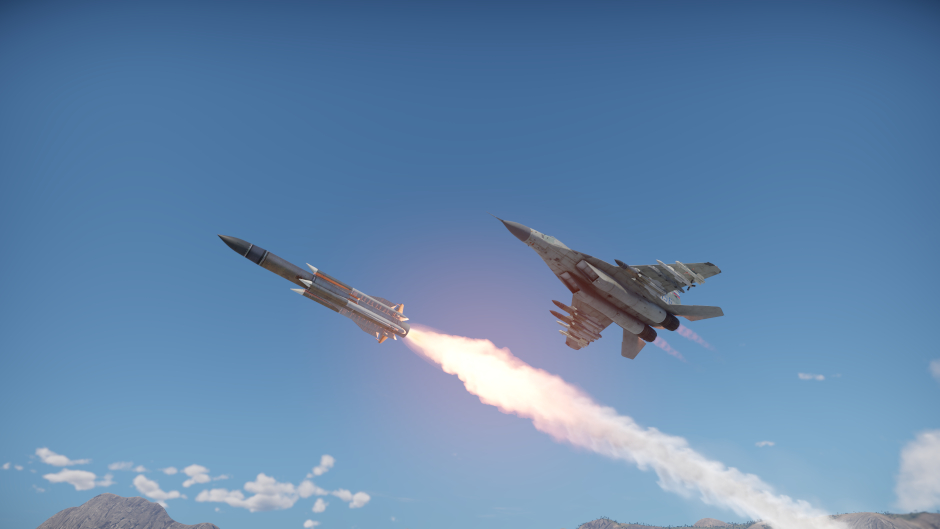
ESM sensors vary in their scanning time. Some systems have a virtually instantaneous update rate for the entire field of view, while others operate similarly to radars, scanning the space sector by sector, which typically takes quite a long time. For example, a full update of the AGM-88 missile’s widest field of view can actually take up to 90 seconds in real life.
What’s next?
To begin with, we’ve decided to only add more advanced missiles that can be guided by electronic support sensors and, if possible, those with wide-range seekers. However, we don’t rule out the possibility of adding older missiles, such as the AGM-45 Shrike, in the future. Everything depends on how the anti-radiation missiles introduced in this update perform in-game.
Please note that some of the missiles shown here actually have a lock-on-after-launch mode, but due to the fact that in-game, especially in combined battles, both allied and enemy radio sources are often concentrated in a small area, we will limit the missiles to launching at a known signal.
That’s it for this one, the Heavy Cavalry update is coming very soon. See you soon in the next dev blogs!
Please note that missile features and mechanics may be subject to refinement and change before being added to the game.
Comments (40)
Comments will be premoderatedWhy is it that in this update, the Russians received level 11.0 anti-radiation missiles via MiG-27s, while Western nations cannot receive the AGM-45 Shrike on F-4 Phantoms?
Hopefully we'll also get functioning ECM so that we can also jam radars. It's always been my dream to be able to jam radars and replicate the spirit of the pulsing bass and synthetic percussion of the unrelated Belgian techno anthem Pump up the Jam.
By the way, didn't the French receive anti-ship missiles via the AM39 Exocet missiles on the Rafale and Mirage fighters?
Does this mean the Tu-95M and B-52H get esm?
with this CAS buff, the problem with SAMs and SPAAs radars switching targets by itself will be solved?
Excellent addition... perhaps in the future we will see helicopters specialized in anti-ship missions, such as the SH60 Seahawk, H225M, Wildcat and Ka 27/28?
well the AH1W does get Sidearms, so I could see Helis getting anti ship missiles at some point since some Helis are getting ARMs
Will the ALARMs get their loiter capability which was their design purpose?
please. i beg you.give us the pucara devblog already T-T
Just get on the dev server bro
Aerfer Ariete, and how do i play it beside test flight? since i can't pre order it....
An exciting edition SEAD and EW are some of my favorite highlights of air combat. Can't wait to see what the future holds now that we have ARMs. Opens the door to a lot of new engagements and vehicle types!
So now that we've got ESM coming, it's there a possibility we'll see EA eventually too or it's to soon 🤔 This would also help the situation in making real anti ship missiles (shipborne) work, although thats a rough situation because countermeasures consisting of anything more than chaff didn't really exist for a while. It will be hard to make that work from a balancing perspective.
Submit a complaint