
- For PC
- For MAC
- For Linux
- OS: Windows 10 (64 bit)
- Processor: Dual-Core 2.2 GHz
- Memory: 4GB
- Video Card: DirectX 11 level video card: AMD Radeon 77XX / NVIDIA GeForce GTX 660. The minimum supported resolution for the game is 720p.
- Network: Broadband Internet connection
- Hard Drive: 23.1 GB (Minimal client)
- OS: Windows 10/11 (64 bit)
- Processor: Intel Core i5 or Ryzen 5 3600 and better
- Memory: 16 GB and more
- Video Card: DirectX 11 level video card or higher and drivers: Nvidia GeForce 1060 and higher, Radeon RX 570 and higher
- Network: Broadband Internet connection
- Hard Drive: 75.9 GB (Full client)
- OS: Mac OS Big Sur 11.0 or newer
- Processor: Core i5, minimum 2.2GHz (Intel Xeon is not supported)
- Memory: 6 GB
- Video Card: Intel Iris Pro 5200 (Mac), or analog from AMD/Nvidia for Mac. Minimum supported resolution for the game is 720p with Metal support.
- Network: Broadband Internet connection
- Hard Drive: 22.1 GB (Minimal client)
- OS: Mac OS Big Sur 11.0 or newer
- Processor: Core i7 (Intel Xeon is not supported)
- Memory: 8 GB
- Video Card: Radeon Vega II or higher with Metal support.
- Network: Broadband Internet connection
- Hard Drive: 62.2 GB (Full client)
- OS: Most modern 64bit Linux distributions
- Processor: Dual-Core 2.4 GHz
- Memory: 4 GB
- Video Card: NVIDIA 660 with latest proprietary drivers (not older than 6 months) / similar AMD with latest proprietary drivers (not older than 6 months; the minimum supported resolution for the game is 720p) with Vulkan support.
- Network: Broadband Internet connection
- Hard Drive: 22.1 GB (Minimal client)
- OS: Ubuntu 20.04 64bit
- Processor: Intel Core i7
- Memory: 16 GB
- Video Card: NVIDIA 1060 with latest proprietary drivers (not older than 6 months) / similar AMD (Radeon RX 570) with latest proprietary drivers (not older than 6 months) with Vulkan support.
- Network: Broadband Internet connection
- Hard Drive: 62.2 GB (Full client)
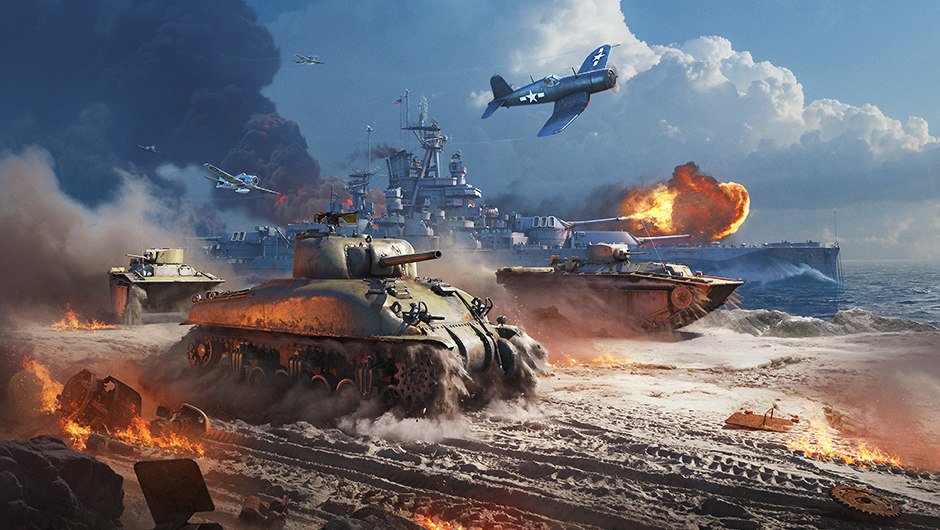
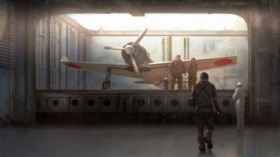
In Pages of History this month, you will find yourself at the center of events that took place in various theaters of war. From Iwo Jima and Narva, Laos and Iraq: participate in battles while using vehicles linked to these historic battles and get some prizes!
From February 1st until February 28th, you will be able to participate in 8 tasks consecutively. Completing each task will grant you a trophy with a reward, completing all of the tasks will earn you a unique profile background!

Operation Detachment was the code name for the American amphibious operation to capture Iwo Jima. On February 19th 1945, the first U.S. landing on the beaches of Iwo Jima took place under Japanese fire. On February 23rd, Mount Suribachi was captured, where the famous photograph of the raising of the American flag was taken. On March 26th, the island finally fell under American control.
You can purchase this profile background for Golden Eagles until without completing tasks. To find it, go to your Nickname → Achievements → Pages of History.
Trophy reward for each task
Completing each individual task will give you a trophy with one of the following rewards:
- 20-50% RP booster for 3-10 battles;
- 20-50% SL booster for 3-10 battles;
- 3-5 universal backups;
- Premium account for 1 day;
- A random ground vehicle camouflage (out of those that can currently be unlocked or purchased with Golden Eagles).
Other terms
- Tasks are available from 11:00 GMT until 11:30 GMT on the final day of each task.
- Tasks can be completed in random battles except for “Assault” mode.
You can read a detailed description of which task is for which day and your overall progress by going to your Nickname → Achievements → Pages of History.
Calendar
February 1st — February 4th
On February 3rd 1945, the battle for the Philippine capital began. After a month of fierce fighting, the city’s Japanese garrison was almost completely destroyed, but Manila itself suffered greatly. Fighting in the Philippines continued until the very end of the Second World War.
February 4th — February 7th
From February 5th to the 23rd, British Empire forces held the line against the Japanese advance into Burma. Surrounded, they fortified themselves near the administrative building that gave the battle its name and held out for two weeks, receiving supplies by air. The Japanese, however, were poorly supplied and suffered from hunger and disease, forcing them to eventually retreat.
February 8th — February 11th
On February 8th 1971, the South Vietnamese Army launched an offensive into Laos, supported by US air and artillery fire. The attackers succeeded in destroying North Vietnamese warehouses and logistics, which were soon restored. However, South Vietnamese forces suffered significant losses and retreated in disarray in March. The Americans lost over 100 helicopters in the operation, and more than 600 were damaged.
February 11th — February 14th
From February 11th to 13th 1942, the Kriegsmarine conducted an operation to remove the battlecruisers Scharnhorst and Gneisenau and the heavy cruiser Prinz Eugen from the constant attacks of the Royal Air Force, transferring them from the west coast of France to home bases. The ships daringly sailed through the English Channel, right in full view of the British. However, due to poor coordination between the Royal Air Force and the Royal Navy, they were unable to inflict any serious damage on the convoy.
February 15th — February 18th
After the siege of Leningrad was lifted, the Red Army launched an offensive on the narrow Narva Isthmus. The enemy’s defenses were unable to be broken, and on February 15th the Soviet forces landed on the western shore of Lake Peipus. This bridgehead was soon overrun by Estonian and German forces; the USSR only managed to capture Narva in July.
February 19th — February 22nd
On February 19th 1945, one of the bloodiest battles of the Pacific theater began. Japanese fighters took off from airfields on Iwo Jima to intercept American bombers, making the island a strategically important point. The United States had the numerical advantage, but the Japanese held their ground in a heavily fortified network of bunkers, caves, and tunnels, allowing them to survive prolonged bombing and naval shelling. The assault on the fortifications proved costly for the Americans, taking over a month.
February 22nd — February 25th
The Allied crossing of the Ruhr was scheduled to begin on February 10th 1945, but the Germans opened the floodgates, flooding the Ruhr Valley. On February 23rd when the waters subsided, the Americans began the crossing: engineers built bridges under smokescreens, and the swift action of Allied armor allowed them to advance rapidly and reach the Rhine in early March.
February 25th – February 28th
On February 27th 1991, the largest tank battle of the Gulf War took place in southern Iraq. British and US forces routed the Iraqi army, capturing tens of thousands of prisoners and destroying hundreds of tanks, infantry fighting vehicles, and artillery pieces. American and British casualties were few, often due to friendly fire. Immediately after the battle, on February 28th, a cessation of hostilities was declared.


Comments (14)
Comments will be premoderatedHow you like the Profile Background?
Goated
would this mean there would also be a profile frame for Pages of History in the future?
Now this is something worth grinding for. Love to see new and different things in pages of history instead of 50th profile picture.
To be honest, I really like the profile pictures lol but agreed on this being a pretty cool change of pace for something new and unique to the Pages of History events.
Do you plan to make actual battles that will reproduce these historical events? WW2 Chronicles was one of the best event this game ever had, I hope to see it return one day, now that the playerbase is way bigger than it used to be back in 2016, such events would work perfectly.
Now, will be nice to remake in game map of Iwo Ijma to looks like this :P
Yes
sweet
Background looks really good, I just lack the vehicles to do the last quest :(
Amazing, I´m in with this one. XD
Is there no avatar in the future? It's ok to use the old avatar as a reward again.
If you don't have to play around BR11 for it, that's fine, because even though the gameplay and balance have been completely ruined by the BMPT, thank you GJ!
Submit a complaint