
- For PC
- For MAC
- For Linux
- OS: Windows 10 (64 bit)
- Processor: Dual-Core 2.2 GHz
- Memory: 4GB
- Video Card: DirectX 11 level video card: AMD Radeon 77XX / NVIDIA GeForce GTX 660. The minimum supported resolution for the game is 720p.
- Network: Broadband Internet connection
- Hard Drive: 23.1 GB (Minimal client)
- OS: Windows 10/11 (64 bit)
- Processor: Intel Core i5 or Ryzen 5 3600 and better
- Memory: 16 GB and more
- Video Card: DirectX 11 level video card or higher and drivers: Nvidia GeForce 1060 and higher, Radeon RX 570 and higher
- Network: Broadband Internet connection
- Hard Drive: 75.9 GB (Full client)
- OS: Mac OS Big Sur 11.0 or newer
- Processor: Core i5, minimum 2.2GHz (Intel Xeon is not supported)
- Memory: 6 GB
- Video Card: Intel Iris Pro 5200 (Mac), or analog from AMD/Nvidia for Mac. Minimum supported resolution for the game is 720p with Metal support.
- Network: Broadband Internet connection
- Hard Drive: 22.1 GB (Minimal client)
- OS: Mac OS Big Sur 11.0 or newer
- Processor: Core i7 (Intel Xeon is not supported)
- Memory: 8 GB
- Video Card: Radeon Vega II or higher with Metal support.
- Network: Broadband Internet connection
- Hard Drive: 62.2 GB (Full client)
- OS: Most modern 64bit Linux distributions
- Processor: Dual-Core 2.4 GHz
- Memory: 4 GB
- Video Card: NVIDIA 660 with latest proprietary drivers (not older than 6 months) / similar AMD with latest proprietary drivers (not older than 6 months; the minimum supported resolution for the game is 720p) with Vulkan support.
- Network: Broadband Internet connection
- Hard Drive: 22.1 GB (Minimal client)
- OS: Ubuntu 20.04 64bit
- Processor: Intel Core i7
- Memory: 16 GB
- Video Card: NVIDIA 1060 with latest proprietary drivers (not older than 6 months) / similar AMD (Radeon RX 570) with latest proprietary drivers (not older than 6 months) with Vulkan support.
- Network: Broadband Internet connection
- Hard Drive: 62.2 GB (Full client)
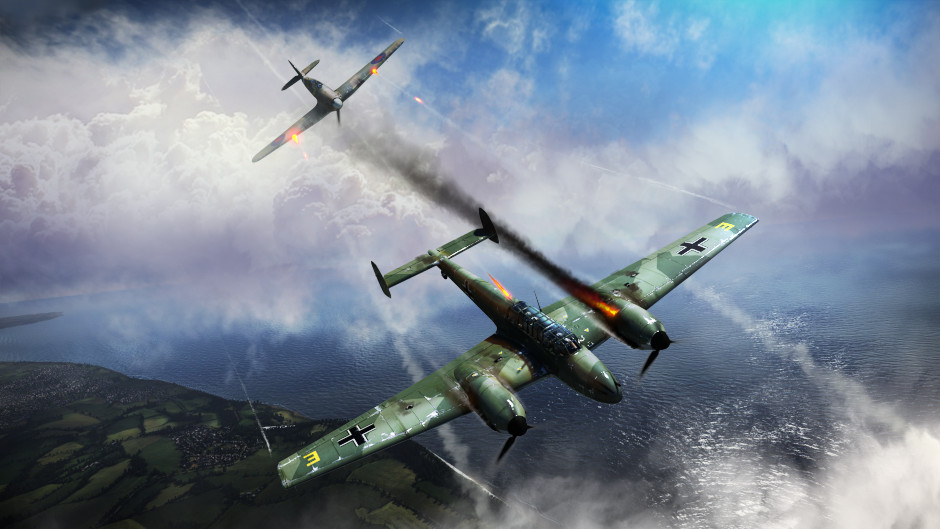
In Pages of History this month, you will find yourself at the center of events that took place in various theaters of war. From Italy and USSR, Egypt and Iran: participate in battles while using vehicles linked to these historic events and get some prizes!
, you will be able to participate in 8 tasks consecutively. Completing each task will grant you a trophy with a reward, completing all of the tasks will earn you a unique profile icon!
Robert Tuck was one of the most successful British aces, credited with 27 to 29 aerial victories. While he flew the Spitfire for much of his career, he commanded No. 257 Squadron, which was equipped with the Hurricane until the autumn of 1941. Thanks to what became known as “Tuck’s luck”, he survived two mid-air collisions, four emergency parachute bailouts, and a long period of captivity in Germany after being shot down in January 1942. In February 1945, Tuck escaped from captivity alongside a Polish comrade who spoke Russian; upon encountering Red Army units, the escapees joined them and, for a time, fought on the ground rather than in the skies! Fortune continued to favor Tuck, as he was eventually permitted to return to Britain, allowing him to celebrate Victory Day back home.
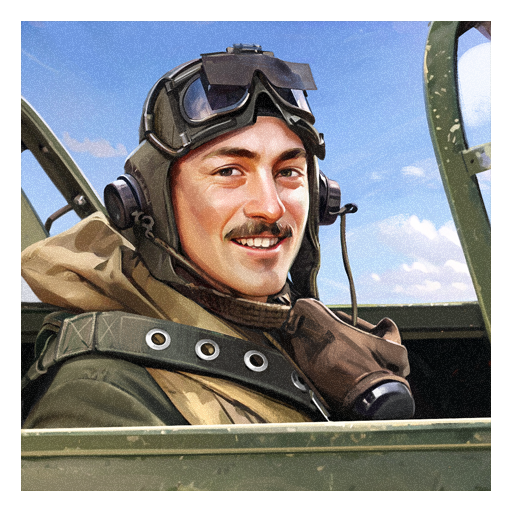
You can purchase this player icon for Golden Eagles without completing tasks. To find it, go to your Nickname → Achievements → Pages of History.
Trophy reward for each task
Completing each individual task will give you a trophy with one of the following rewards:
- 20-50% RP booster for 3-10 battles
- 20-50% SL booster for 3-10 battles
- 3-5 universal backups
- Premium account for 1 day
- A random ground vehicle camouflage (out of those that can currently be unlocked or purchased with Golden Eagles)
Other terms
- Tasks are available from 11:00 GMT until 11:30 GMT on the final day of each task.
- Tasks can be completed in random battles except for “Assault” mode.
You can read a detailed description of which task is for which day and your overall progress by going to your Nickname → Achievements → Pages of History.
Calendar
Barbara Line
Following the breach of the Volturno Line (the Wehrmacht’s first defensive position in central Italy) German forces conducted a gradual withdrawal toward their second line, the Barbara Line, over the course of three weeks. The terrain was well-suited for defensive operations, however, they were unable to hold the Barbara Line. On November 2nd 1943, Allied forces attacked the Wehrmacht’s fortifications and by November 3rd, had broken through them.
The First Flight of the Hawker Hurricane
On November 6th 1935, the Hurricane fighter, developed by Hawker Aircraft Ltd., took to the air for the first time. It became one of the most widely produced aircraft of the early Second World War, with a total of over 14,500 Hurricanes manufactured. These aircraft saw combat in Norway and France, defended Britain and Malta, were supplied to the USSR and Yugoslavia, and also served in the African theater of operations in their tropical variants.
Battle of Taranto
In the autumn of 1940, the main body of the Italian fleet was based in the city of Taranto, in the south of the country. To launch a surprise attack on the moored vessels, Great Britain concentrated its entire Mediterranean Fleet, and launched 21 Swordfish torpedo bombers from HMS Illustrious. The operation was highly effective: one Italian battleship was sunk, and two others sustained heavy damage. Great Britain seized the strategic initiative in the Mediterranean.
Klinsko-Solnechnogorsk Defensive Operation
In the autumn of 1941, the German offensive against Moscow ground to a halt due to deep mud. However, by November 15th the ground had frozen sufficiently to allow the advance to resume. Under the plan for Operation Typhoon, Moscow was to be seized in a pincer movement from the north and the south, but the Wehrmacht met with defeat in both directions. In the north, German forces captured Klin and Solnechnogorsk, only to be brought to a halt by December 5th. The Red Army then launched a counteroffensive, recapturing both towns by mid-December.
Operation Crusader
On November 18th 1941, the British Eighth Army launched its second offensive in Cyrenaica. It proved successful: for the first time in ground combat, the Wehrmacht suffered a defeat. Axis forces were compelled to retreat from Egypt into Libya, with a large number of their soldiers taken prisoner.
Operation Uranus
On November 19th 1942, Soviet forces began the encirclement of Axis troops near Stalingrad. By November 22nd the ring had closed, trapping several hundred thousand soldiers. The German command recommended attempting a breakout, but Adolf Hitler forbade any evacuation, believing that the Luftwaffe would be able to establish an aerial supply line. This error proved fatal, as the encircled forces surrendered in early February 1943.
Formation of the “Normandie-Niemen” Fighter Regiment
On November 25th 1942, an agreement was signed to form a French squadron on the territory of the USSR. In July 1943, the unit, named “Normandie” after a French province, was expanded to the size of a regiment; following its display of valor during battles near the Neman River in Lithuania, it was renamed “Normandie-Niemen”. In total, the regiment achieved 273 confirmed aerial victories.
Operation Tariq al-Qods
During Iraq’s 1980 invasion of Iran, Saddam Hussein’s forces captured numerous Iranian border towns, including Bostan. Attempts to retake them were unsuccessful for a long time; however, on November 29th 1981 during Operation Road to Jerusalem, Iran succeeded in recapturing the town, though at the cost of heavy casualties.

Comments (0)
Comments will be premoderatedSubmit a complaint