
- For PC
- For MAC
- For Linux
- OS: Windows 10 (64 bit)
- Processor: Dual-Core 2.2 GHz
- Memory: 4GB
- Video Card: DirectX 11 level video card: AMD Radeon 77XX / NVIDIA GeForce GTX 660. The minimum supported resolution for the game is 720p.
- Network: Broadband Internet connection
- Hard Drive: 23.1 GB (Minimal client)
- OS: Windows 10/11 (64 bit)
- Processor: Intel Core i5 or Ryzen 5 3600 and better
- Memory: 16 GB and more
- Video Card: DirectX 11 level video card or higher and drivers: Nvidia GeForce 1060 and higher, Radeon RX 570 and higher
- Network: Broadband Internet connection
- Hard Drive: 75.9 GB (Full client)
- OS: Mac OS Big Sur 11.0 or newer
- Processor: Core i5, minimum 2.2GHz (Intel Xeon is not supported)
- Memory: 6 GB
- Video Card: Intel Iris Pro 5200 (Mac), or analog from AMD/Nvidia for Mac. Minimum supported resolution for the game is 720p with Metal support.
- Network: Broadband Internet connection
- Hard Drive: 22.1 GB (Minimal client)
- OS: Mac OS Big Sur 11.0 or newer
- Processor: Core i7 (Intel Xeon is not supported)
- Memory: 8 GB
- Video Card: Radeon Vega II or higher with Metal support.
- Network: Broadband Internet connection
- Hard Drive: 62.2 GB (Full client)
- OS: Most modern 64bit Linux distributions
- Processor: Dual-Core 2.4 GHz
- Memory: 4 GB
- Video Card: NVIDIA 660 with latest proprietary drivers (not older than 6 months) / similar AMD with latest proprietary drivers (not older than 6 months; the minimum supported resolution for the game is 720p) with Vulkan support.
- Network: Broadband Internet connection
- Hard Drive: 22.1 GB (Minimal client)
- OS: Ubuntu 20.04 64bit
- Processor: Intel Core i7
- Memory: 16 GB
- Video Card: NVIDIA 1060 with latest proprietary drivers (not older than 6 months) / similar AMD (Radeon RX 570) with latest proprietary drivers (not older than 6 months) with Vulkan support.
- Network: Broadband Internet connection
- Hard Drive: 62.2 GB (Full client)
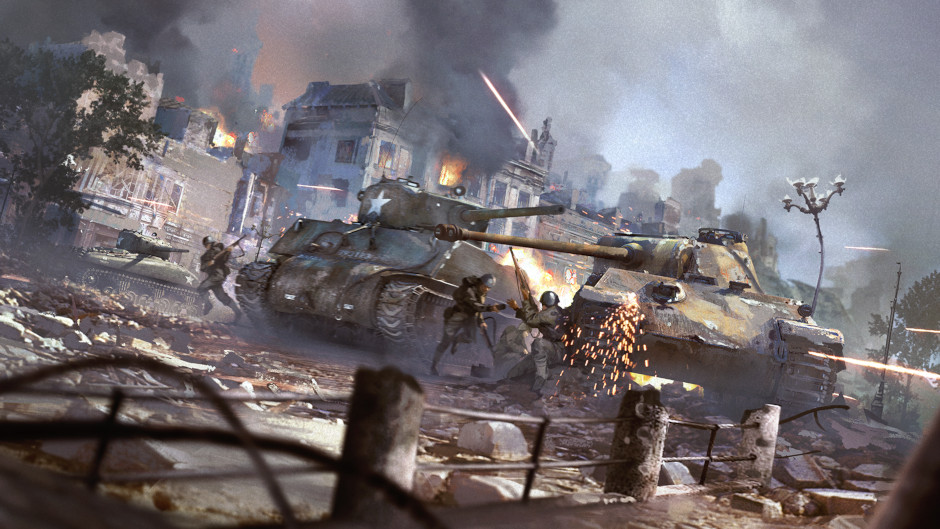
In Pages of History this month, you will find yourself at the center of events that took place in various theaters of war. From the USSR and Germany to Iran and India: participate in battles while using vehicles linked to these historic battles and get some prizes!
, you will be able to participate in 8 tasks consecutively. Completing each task will grant you a trophy with a reward, completing all of the tasks will earn you a unique profile icon!
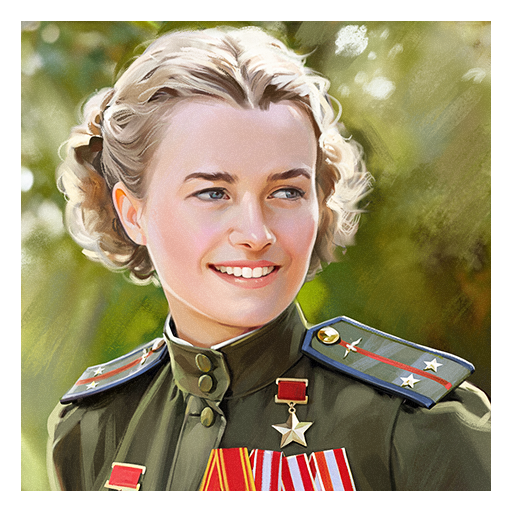
Natalya Meklin enlisted in the 588th Bomber Regiment at her own request and was deployed to the front in the summer of 1942, when she was just 19 years old. She took part in the Tuapse Operation, carrying out bombing raids against enemy positions, supply routes, and crossings in the mountainous regions of the Western Caucasus. She continued flying combat missions until the end of the war, rising to the rank of flight commander and being awarded the title of Hero of the Soviet Union.
You can purchase this player icon for Golden Eagles without completing tasks. To find it, go to your Nickname → Achievements → Pages of History.
Trophy reward for each task
Completing each individual task will give you a trophy with one of the following rewards:
- 20-50% RP booster for 3-10 battles
- 20-50% SL booster for 3-10 battles
- 3-5 universal backups
- Premium account for 1 day
- A random ground vehicle camouflage (out of those that can currently be unlocked or purchased with Golden Eagles)
Other terms
- Tasks are available from 11:00 GMT until 11:30 GMT on the final day of each task.
- Tasks can be completed in random battles except for “Assault” mode.
You can read a detailed description of which task is for which day and your overall progress by going to your Nickname → Achievements → Pages of History.
Calendar
Bryansk Operation
Shortly after the victory at the Battle of Kursk, the Red Army launched an offensive near Bryansk. One of the most powerful partisan formations operated in the surrounding forests; it carried out large-scale acts of sabotage on the railways and joined the battle for the city as regular army units stormed it. Bryansk celebrates City Day on September 17th, marking the date of its liberation during this operation.
Berlin Victory Parade of 1945
On September 7th 1945, a joint Victory Parade took place in Berlin featuring the USSR, the USA, Great Britain, and France. This was the last large-scale event to bring together all the key Allies of the Second World War. The USSR used the parade to showcase a new piece of hardware: the IS-3 heavy tank; Great Britain displayed the Comet and Cromwell, the USA the M4A3E8 and M24, and France brought its time-tested Shermans.
Battle of Asal Uttar
The largest tank battle of the Second Indo-Pakistani War took place from September 8th to 10th 1965. Advancing Pakistani forces became bogged down in terrain that had been deliberately flooded and found themselves trapped in a U-shaped pocket. Indian Centurions confidently engaged the immobilized Pakistani Pattons, while pre-ranged artillery and air strikes finished the job. The Pakistanis later dubbed the battlefield the “Graveyard of Pattons”.
Baltic Operation
From September 14th to November 24th 1944, the Red Army fought the Wehrmacht in the Baltic states. Tallinn was captured on September 22nd and Riga on October 13th. On September 27th, a daring amphibious operation was launched against the Moonsund Archipelago with Finland’s support. As a result of the operation, almost the entire Baltic region came under Soviet control, while Wehrmacht Army Group North found itself trapped in the Courland Pocket.
Battle of Arracourt
From September 18th to 28th 1944, one of the largest tank battles of the Western Front took place near Arracourt, France. American Shermans faced off against German Panthers and won. Due to poor visibility, the Panthers could not capitalize on their key advantage: accurate, long-range fire. The Americans skillfully executed flanking and rear maneuvers and effectively coordinated with artillery and air support, achieving the near-total defeat of the enemy. By various estimates, Germany lost up to 200 tanks and self-propelled guns in the battle.
Battle of Hürtgen Forest
On September 18th 1944, the longest battle in the history of the U.S. Army began. Having entered German territory from the west, American forces became bogged down for months in difficult forest terrain. The Germans were fiercely defending this area while planning a winter counteroffensive nearby in the Ardennes. The Americans suffered heavy casualties from mines, tripwires, and shelling, as well as from exhaustion and frostbite.
Tuapse Defensive Operation
On September 25th 1942, the Wehrmacht launched an offensive against Tuapse, a key Soviet port on the Black Sea. The mountainous terrain and autumn weather hampered the advance of armored vehicles, while Soviet forces in the city were supplied by sea. In December, the Germans retreated: first from the Tuapse area and subsequently from the Caucasus altogether.
Operation Samen-ol-A'emeh
On September 27th-29th 1981, Iranian forces attacked Iraqi troops that had been besieging the city of Abadan for a year. The offensive began at night and was well-coordinated: the Iranians rapidly seized key roads and crossings, paralyzing the Iraqi forces. The city was recaptured, and the strategic initiative in the war shifted to Iran.
Comments (19)
Comments will be premoderatedFor a bit of critical feedback, I'm not a fan of how this portrait slims her face and makes her smile compared to the original portrait. I think it's against the spirit of the story of the Night Witches that you "yaasified" her portrait to make her more traditionally feminine instead of just accepting her as an accomplished pilot. I'm not saying it was intentional, but I think there's subconscious bias that leads to these choices when you wouldn't "pretty up" a man like Douglas MacArthur.
Beautiful
nice painting ! im just a little sad we never got any official reasoning on why there was no pages of history: august?
Holiday break :)
Stona_WT, thank you dear
From the Depths of Hell In Silence! Cast their Spells In Explosive Violence!
realy page of history are your rewards for login and boosters for example, like booster only for allies ;) how many years you dont think about that 15+?? game need changes! or battlepas heh, i think this is only game where i dont get reward for random play but only for mision... and mision and simulator heh :-) .... just page of history this game all
I'm not sure what you mean. Could you please try to express yourself more clearly? You do not like the PoH rewards?
Very nice profile icon, the painted look is a very classical and gentle picture. Reminds me of the early warthunder style. More modern style would have been some in-focus plane in the background, but this is better sometines
well, shes not a Blonde but a Brunette - you may chek not only her war time photos but the ones from her 1980s interviews.
This is a beautiful portrait, right on cue for my favorite month, September.
Nice! That really is a good profile picture
This PFP is really good honestly, looks awesome and the painting texture is literally the cherry on top, i remember people saying the PFP's were being made with AI, some of them do look like it but those are way older than these good AI's that can make realistic images so its kinda confusing, but awesome work.
Submit a complaint