
- PC平台
- MAC平台
- Linux平台
- 操作系统:Windows 10 (64位)
- 处理器:双核 2.2 GHz
- 内存大小:4GB
- 图形处理器:DirectX 11 级别的显卡 - AMD Radeon 77XX / NVIDIA GeForce GTX 660 (游戏支持的解析度最低为720P)
- 网络:宽带网络连接
- 硬盘空间:23.1 GB (极简客户端)
- 操作系统:Windows 10 / 11 (64位)
- 处理器:英特尔 Core i5 或 Ryzen 5 3600 及以上
- 内存大小: 16 GB 或更高
- 图形处理器:DirectX 11 及以上级别的显卡 - Nvidia GeForce GTX1060 / AMD Radeon RX 570 同等级及更高
- 网络:宽带网络连接
- 硬盘空间: 75.9 GB (完整客户端)
- 操作系统:Mac OS Big Sur 11.0 或更新版本
- 处理器:Core i7,至少需要 2.2GHz (不支持Intel Xeon系列)
- 内存大小:6 GB
- 图形处理器: Intel Iris Pro 5200 (Mac) 或同等水平的 AMD / Nvidia显卡 (游戏支持的解析度最低为720P)
- 网络:宽带网络连接
- 硬盘空间: 22.1 GB (极简客户端)
- 操作系统:Mac OS Big Sur 11.0 或更新版本
- 处理器:Core i7 (不支持Intel Xeon系列)
- 内存大小:8 GB
- 图形处理器:Radeon Vega II或更高,需要支持Metal
- 网络:宽带网络连接
- 硬盘空间:62.2 GB (完整客户端)
- 操作系统:大部分现代 64 位 Linux 系统发行版
- 处理器:双核 2.4 GHz
- 内存大小:4 GB
- 图形处理器:NVIDIA GTX 660 及最新显卡驱动 (至少为半年以内的版本) 或同等水平的 AMD 显卡及最新的显卡驱动 (至少为半年以内的版本)。游戏支持的解析度最低为720P。显卡需要支持Vulkan API
- 网络:宽带网络连接
- 硬盘空间: 22.1 GB (极简客户端)
- 操作系统:Ubuntu 20.04 64位
- 处理器:Intel Core i7
- 内存大小: 16 GB
- 图形处理器:NVIDIA GTX 1060 与最新显卡驱动 (至少为半年以内的版本) 或同等水平的 AMD 显卡 (如 Radeon RX 570) 及最新的显卡驱动 (至少为半年以内的版本)。
- 网络:宽带网络连接
- 硬盘空间:62.2 GB (完整客户端)

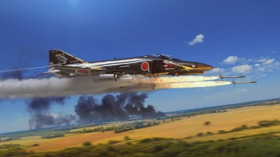
One of the main features coming to the next major update will be the introduction of medium-range air-to-air missiles with active radar guidance, also known as FOX-3!
Not too long ago now, during open testing on the dev server, you had the opportunity to test medium-range active radar-guided missiles (ARH) in air battles. We’ve collected your feedback and statistics and are now ready to introduce these new weapons into the game in the next major update!
Medium-range missiles that have an ARH seeker are also known as “FOX-3”, a codeword used by NATO pilots to indicate that they had been launched. There isn’t just the FOX-3 codeword, as FOX-1 is for a missile with a SARH seeker, while FOX-2 is for a missile with an IR seeker. FOX-3 missiles coming to the game is an important development in modern air combat and marks a key change compared to missiles currently in the game. Previously, medium-range missiles with semi-active radar homing seekers (SARH) needed to illuminate a target until it hit, which put the aircraft that had launched the missile in a vulnerable position due to the need to keep the target locked until impact.

With an understanding of this shortcoming, at the start of the 1980s, advanced aviation powers began to develop a new generation of medium-range aircraft missiles. These were distinguished by the presence of an active radar seeker that didn’t require target tracking throughout the missile’s flight.
Good aerodynamics and the use of an energetically optimal trajectory with a climb and further exchange of potential energy for kinetic energy ensures a high launch range for ARH missiles. Unlike missiles with semi-active radar guidance, they operate autonomously and don’t require a constant illumination of the target by the pilot or the radar of the carrier aircraft. However when launching from longer ranges, it’s most optimal to track a target in TWS (Track-While-Scan) mode to provide radio correction. A common property of these types of missiles is a combined control method: the ARH of the missile is capable of capturing a “fighter type target” at a distance of 15-20 km, which allows the missile to be used at close range in a fire and forget format.
When flying over a long distance, before approaching the target at the capture distance, the missile is guided using an inertial navigation system, which can receive correction commands from the carrier. It clarifies the coordinates and speed of the target in the inertial guidance system, which is necessary to launch the missile at a maneuvering target. The missile’s autonomy in the final part of its trajectory allows it to simultaneously fire at several targets, including in the “fire and forget” mode, but for effective use it’s better to keep targets in the Track-While-Scan mode for as long as possible.
The success of an attack with ARH missiles depends on several factors. Despite the fact that false thermal targets are not a hindrance for this type of missile, they’re not always the ultimate weapon. The Radiation Warning Receiver (RWR) which is available to most modern aircraft will warn the pilot at the final section of the missile’s trajectory when the radar seeker goes into active mode (i.e. at a distance of 15-20 km). The main defense against medium-range missiles is anti-missile maneuvers — if the distance allows for it, perform a 180-degree turn to attempt to escape from it. To shorten the effective launch distance, use a barrel roll or the scissors and crank maneuvers. At short distances, only the “3-9” maneuver is effective. Sharply turn the plane to 3 or 9 o’clock along course with launching countermeasures.

The first medium-range missiles with ARH seekers will be the French MICA, Chinese PL-12, American AIM-120, Russian R-77, Japanese AAM-4, Israeli Derby and South African R-Darter.
These models are characterized by excellent maneuverability and high thrust. The dimensions of FOX-3 missiles allow for a large load to be carried, even on lighter fighters. The aircraft that will carry these weapons will be amongst the top fighters for all nations in the game, with the best aircraft in the game now having new tactical capabilities.
We’re all eagerly awaiting for the next major update so that we can try out these new missiles in action together with you!
评论 (0)
评论将处于预审核状态提交举报