
- PC平台
- MAC平台
- Linux平台
- 操作系统:Windows 10 (64位)
- 处理器:双核 2.2 GHz
- 内存大小:4GB
- 图形处理器:DirectX 11 级别的显卡 - AMD Radeon 77XX / NVIDIA GeForce GTX 660 (游戏支持的解析度最低为720P)
- 网络:宽带网络连接
- 硬盘空间:23.1 GB (极简客户端)
- 操作系统:Windows 10 / 11 (64位)
- 处理器:英特尔 Core i5 或 Ryzen 5 3600 及以上
- 内存大小: 16 GB 或更高
- 图形处理器:DirectX 11 及以上级别的显卡 - Nvidia GeForce GTX1060 / AMD Radeon RX 570 同等级及更高
- 网络:宽带网络连接
- 硬盘空间: 75.9 GB (完整客户端)
- 操作系统:Mac OS Big Sur 11.0 或更新版本
- 处理器:Core i7,至少需要 2.2GHz (不支持Intel Xeon系列)
- 内存大小:6 GB
- 图形处理器: Intel Iris Pro 5200 (Mac) 或同等水平的 AMD / Nvidia显卡 (游戏支持的解析度最低为720P)
- 网络:宽带网络连接
- 硬盘空间: 22.1 GB (极简客户端)
- 操作系统:Mac OS Big Sur 11.0 或更新版本
- 处理器:Core i7 (不支持Intel Xeon系列)
- 内存大小:8 GB
- 图形处理器:Radeon Vega II或更高,需要支持Metal
- 网络:宽带网络连接
- 硬盘空间:62.2 GB (完整客户端)
- 操作系统:大部分现代 64 位 Linux 系统发行版
- 处理器:双核 2.4 GHz
- 内存大小:4 GB
- 图形处理器:NVIDIA GTX 660 及最新显卡驱动 (至少为半年以内的版本) 或同等水平的 AMD 显卡及最新的显卡驱动 (至少为半年以内的版本)。游戏支持的解析度最低为720P。显卡需要支持Vulkan API
- 网络:宽带网络连接
- 硬盘空间: 22.1 GB (极简客户端)
- 操作系统:Ubuntu 20.04 64位
- 处理器:Intel Core i7
- 内存大小: 16 GB
- 图形处理器:NVIDIA GTX 1060 与最新显卡驱动 (至少为半年以内的版本) 或同等水平的 AMD 显卡 (如 Radeon RX 570) 及最新的显卡驱动 (至少为半年以内的版本)。
- 网络:宽带网络连接
- 硬盘空间:62.2 GB (完整客户端)
Meet the vehicle reward in the Space Program event, the American experimental delta-wing F-16XL!
At a glance:
- Excellent maneuverability in extreme turns
- Versatile armament
- ARH missiles
- High maximum speed
- Large fuel tanks
- Slightly reduced acceleration
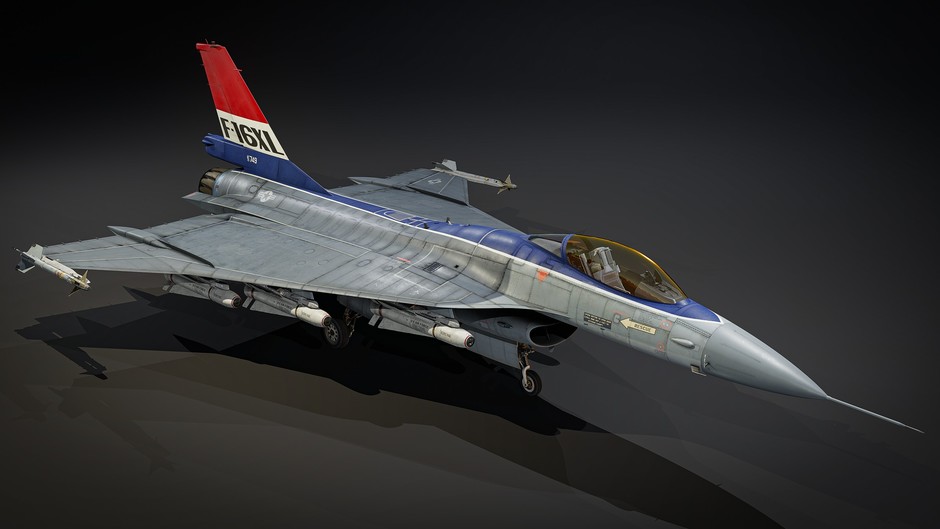
Introducing the F-16XL!
The vehicle reward in the Space Program event is perhaps the most unusual F-16 that there is, as it is a unique modification with a delta wing and an elongated body! This makes the F-16XL have new turning capabilities and means it can carry versatile weapons for any mission. Let’s take a look!
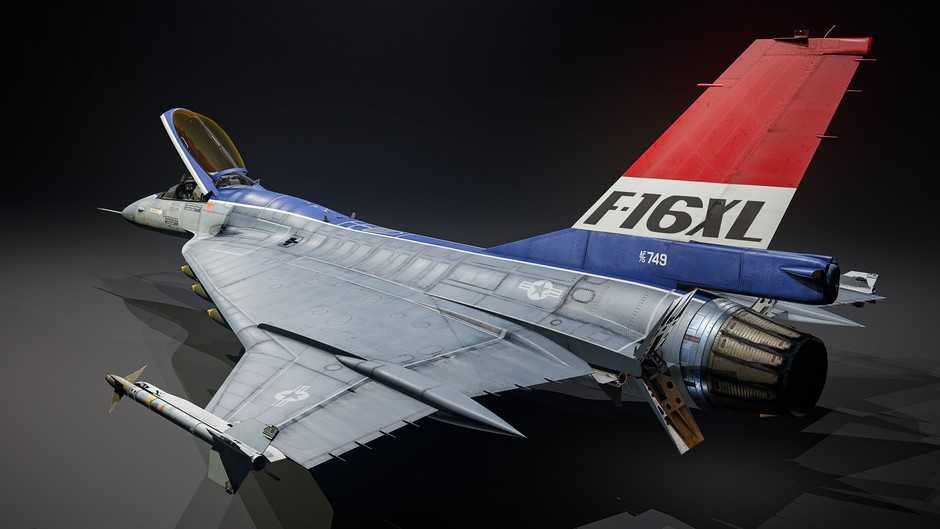
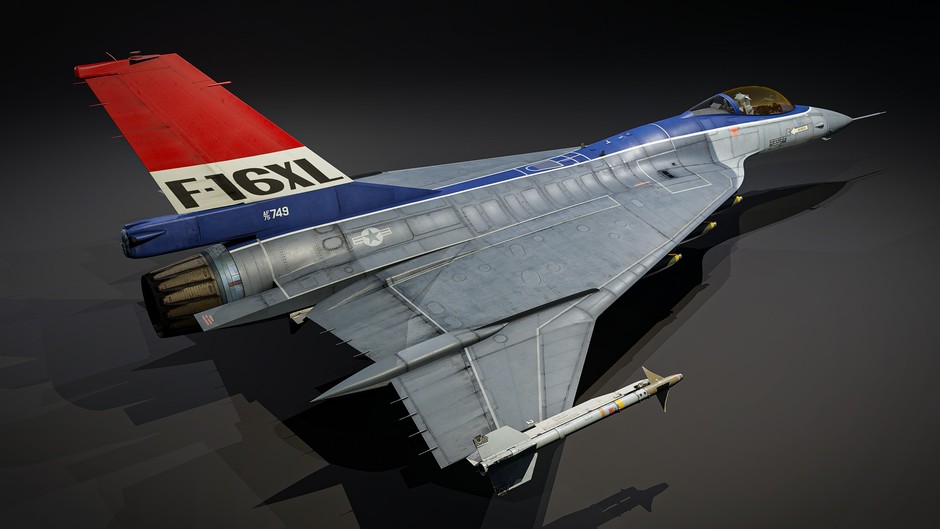
Using the F-16XL in Battle
This version of the F-16 retains one of the series’ key strengths; versatility, albeit with a focus on ground attack. Its high speed and lightning-fast evasive maneuvers are matched by a robust armament: with both radar guided and all-aspect IR missiles for air-to-air combat, air-to-ground missiles, and up to 4 tons of free-fall bombs for ground attacks, all in a variety of combinations! Thirteen hardpoints allow for a comprehensive ground attack arsenal, while also carrying a pair of Sidewinders and up to four medium-range AIM-120As.
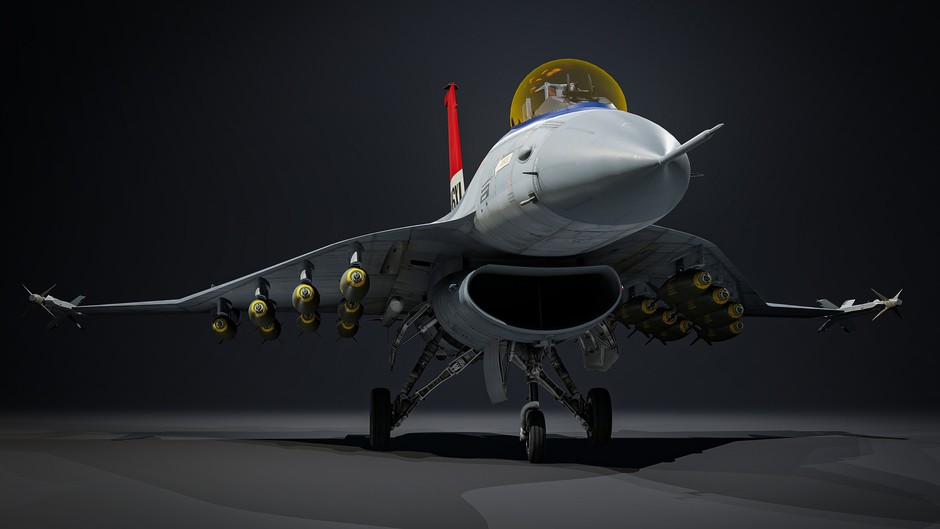
Feature spotlight: New Wing
The experimental F-16XL is heavier, its acceleration has been reduced, its airframe has been lengthened, and the engine remains the same as on the earliest models of the fighter. So is this a “Houston, we have a problem”? No, not at all! The F-16XL offers many capabilities unmatched by other aircraft in the series. The most important features of the delta wing are sharp maneuvers in extreme turns, good bank angle, and improved stall stability. However, it’s better to fly straight, as maneuvering immediately results in a drop in speed, and a sustained turn on the F-16XL is significantly longer than on other Fighting Falcons. However, only the F-16XL can gracefully evade a missile in a sharp pitch-up attitude, firing flares!
Developer comment: The F-16XL was hard to ignore, but its flight pattern makes it so different from other F-16s that we didn’t want to include it in the American aviation tree as a researchable vehicle. The Space Program event is an excellent way to obtain an unusual Rank VIII strike fighter, and to practice beyond-visual-range combat with AMRAAM missiles if you haven’t yet researched other aircraft with this weaponry. The aircraft’s collectible value is also worth mentioning. The F-16XL comes to the game in its classic, signature camouflage from testing, a gray military paint scheme, and of course a cool NASA livery!
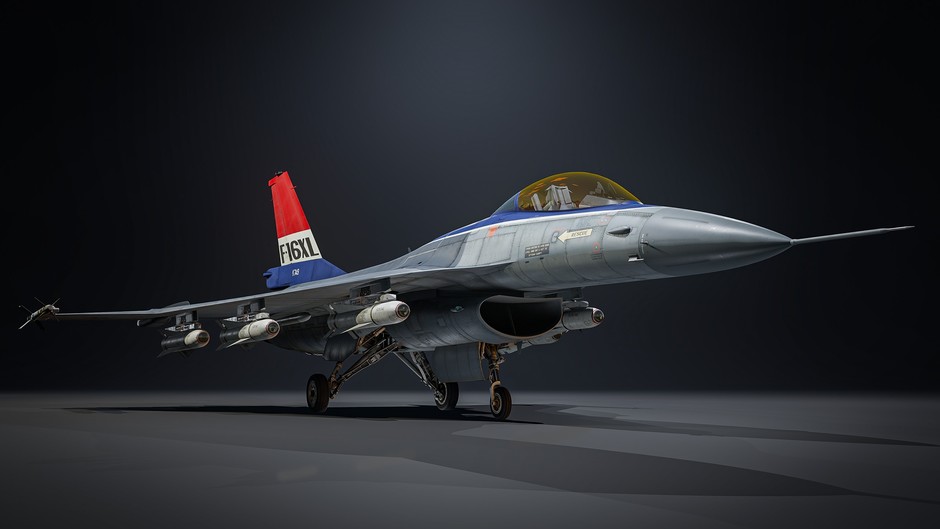
In February 1980, General Dynamics unveiled a fighter design with a redesigned wing. The new design was dubbed the SCAMP (Supersonic Cruise and Maneuvering Prototype), later renamed the F-16XL. The wing area was double that of the standard F-16. The aircraft was designed to achieve supersonic cruise speeds without afterburners.
In late 1980, the US Air Force and General Dynamics agreed to joint testing. The first prototype flew on July 3rd 1982. In March 1981, the US Air Force announced a competition for a new fighter to replace the F-111. General Dynamics submitted the F-16XL, while McDonnell Douglas proposed the F-15E, which won the competition. After losing, both F-16XL prototypes were placed into storage. They completed 437 and 361 test flights, but supersonic cruise was never achieved.
In the late 1980s, F-16XLs were transferred to NASA to study laminar flow at supersonic speeds. The F-16XL made its last flight in 1999. In 2009, both aircraft were decommissioned and are currently stored at Edwards Air Force Base.
Be sure to get your hands on the F-16XL by completing stages in the Space Program event, which started today. All details in the link below!
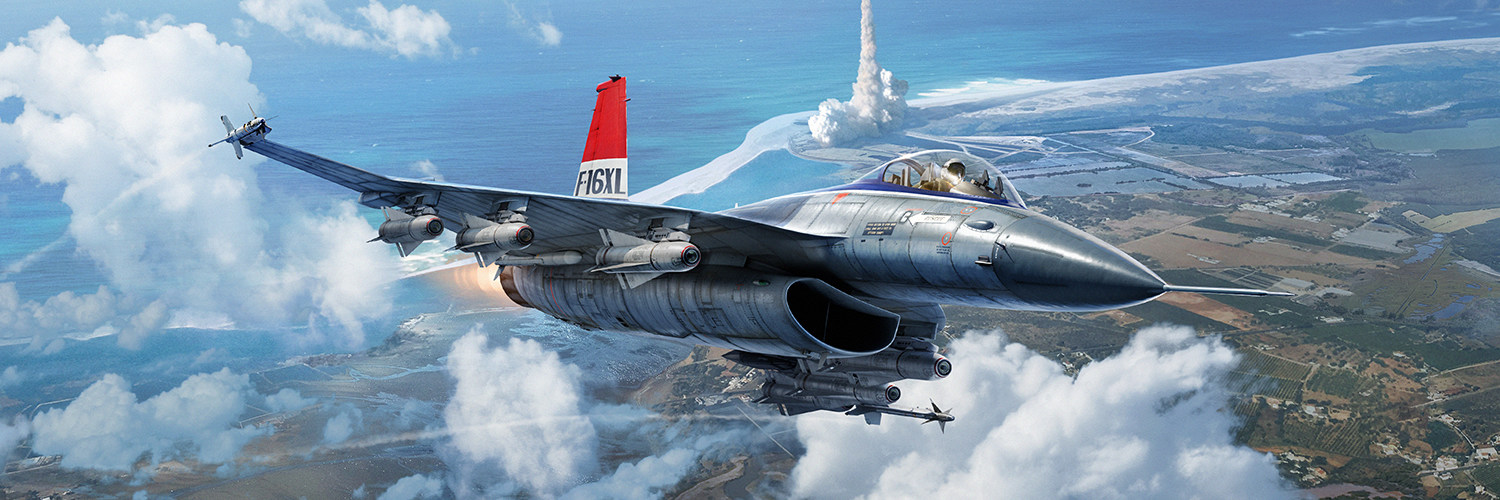
Click here to find out more details about the Space Program Event
Please note that vehicle specifications may be subject to revision and change before being added to the game.



评论 (0)
评论将处于预审核状态提交举报