- PC
- MAC
- Linux
- 운영체제: Windows 10 (64 bit)
- 프로세서: 2.2 GHz 듀얼코어 이상
- 메모리: 4GB
- 그래픽 카드: DirectX 11 이상을 지원하는 AMD Radeon 77XX / NVIDIA GeForce GT 660. 최소 사양 해상도: 720p
- 네트워크: 브로드밴드 인터넷
- 여유 저장 공간: 22.1 GB (최소 클라이언트)
- 운영체제: Windows 10/11 (64 bit)
- 프로세서: Intel Core i5 또는 Ryzen 5 3600 이상
- 메모리: 16 GB 이상
- 그래픽 카드: DirectX 11 이상을 지원하는 Nvidia GeForce 1060, 또는 AMD RX 570 혹은 그 이상
- 네트워크: 브로드밴드 인터넷
- 여유 저장 공간: 62.2 GB (전체 클라이언트)
- 운영체제: Mac OS Big Sur 11.0
- 프로세서: 최소 2.2 GHz의 Core i5 (Intel Xeon 은 지원하지 않습니다)
- 메모리: 6 GB
- 그래픽 카드: Metal 을 지원하는 Intel Iris Pro 5200 (Mac), 혹은 이와 비슷한 성능을 가지는 Mac 버전의 AMD/Nvidia. 최소 해상도: 720p
- 네트워크: 브로드밴드 인터넷
- 여유 저장 공간: 22.1 GB (최소 클라이언트)
- 운영체제: Mac OS Big Sur 11.0
- 프로세서: Core i7 (Intel Xeon 은 지원하지 않습니다)
- 메모리: 8 GB
- 그래픽 카드: Metal을 지원하는 Radeon Vega II 이상
- 네트워크: 브로드밴드 인터넷
- 여유 저장 공간: 62.2 GB (전체 클라이언트)
- 운영체제: 64bit Linux 중 최신 버전
- 프로세서: 2.4 GHz 듀얼코어
- 메모리: 4 GB
- 그래픽 카드: Vulkan 을 지원하고, 최신 그래픽 드라이버를 지원하는 NVIDIA 660 (6개월 미만) 혹은 그와 동급의 성능을 가지며 최신 그래픽 드라이버를 지원하는 AMD (6개월 미만; 최소사양 지원 해상도 720p)
- 네트워크: 브로드밴드 인터넷
- 여유 저장 공간: 22.1 GB (최소 클라이언트)
- 운영체제: Ubuntu 20.04 64bit
- 프로세서: Intel Core i7
- 메모리: 16 GB
- 그래픽 카드: Vulkan 을 지원하고, 최신 그래픽 드라이버를 지원하는 NVIDIA 1060 (6개월 미만) 혹은 그와 동급의 성능을 가지며 최신 그래픽 드라이버를 지원하는 AMD RX 570 (6개월 미만; 최소사양 지원 해상도 720p) 이상
- 네트워크: 브로드밴드 인터넷
- 여유 저장 공간: 62.2 GB (전체 클라이언트)
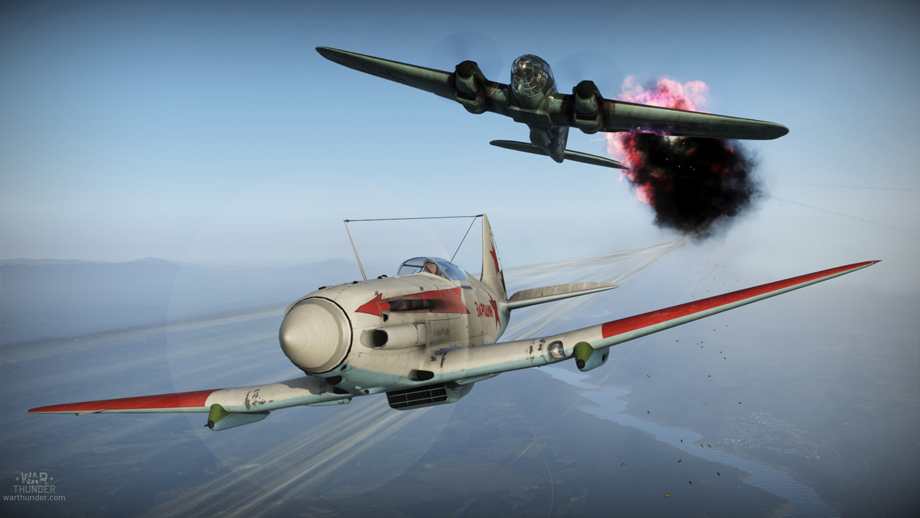
MiG-3-15-BK “Za Rodinu” skin of the 12th GvIAP, 6th IAK of the Moscow Air Defence Zone in the Winter of 1941-1942 by ROKEK
From the 5th August 12:00 GMT to 6th August 12:00 GMT
+30% research points for MiG-3-15, MiG-3-15(BK) and MiG-3-34
30% discount on the price of MiG-9, MiG-9/L and 20% on the price of MiG-15, MiG-15bis

Artem Mikoyan was born in Armenia on the 5th of August 1905. He would later become one of the most celebrated Soviet aircraft designers together with his colleague, Mikhail Gurevich. MiG, the company prefix associated with many Soviet jet fighters, comes from the surnames of these two engineers.
Artem Ivanovich Mikoyan was born in the monastery village of Sanahin in Armenia. He completed his basic education in the Russian city of Rostov, where he also had the job of a machine-tool operator. He was later conscripted into military service, and after completing his required time, graduated from the Zhukovsky Air Force Academy in 1937.
He initially worked together with Nikolai Polikarpov on plane designs, but was named head of a new Moscow aircraft design bureau on 8 December 1939. Together with Mikhail Iosifovich Gurevich, Mikoyan designed and manufactured a series of relatively unsuccessful high-altitude fighters during World War II, such as the MiG-1 and MiG-3. These planes, while very effective at high altitudes, proved to be inferior to the german Messerschmitt planes during Operation Barbarossa, where most of the fighting happened at lower altitudes.

Failure was often not tolerated, but Mikoyan’s brother Anastas held a high ranking position as an advisor to Stalin, and was able to protect his little brother. Due to his brother’s status, Artem Mikoyan remained head of the bureau and continued to design aircraft
During the years after the war, Soviet designers were still having trouble with jet fighter designs. Mikoyan proposed to buy a license from Rolls-Royce for their Nene turbojet engines. Stalin claimed that there was no way that the “enemy” would sell him their secrets. However, he gave his approval for them to at least try, and Mikoyan, along with a few others, traveled to the United Kingdom. There, they were met by the Labour Party’s pro-Soviet Minister of Trade, Sir Stafford Cripps, who agreed to sell them blueprints and a license for the production of the Rolls-Royce Nene engines.

Having access to both captured German fighters as well as the new Nene engines, work began on a new jet fighter model around 1946. This design led to the making of the MiG-15, with its maiden flight on the 31st of December, 1948. This aircraft had excellent performance and formed the basis for future Soviet and Russian jet fighters. While originally intended to intercept enemy bombers, the MiG-15s proved to be effective against American jet fighters during the Korean war. In addition to variants of the MiG-15, Mikoyan later went on to design the MiG-17 and MiG-19, as well as the famous MiG-21.
Artem Mikoyan died on December 9th, 1970, and was buried Novodevichy Cemetery in Moscow.
Sergej "NuclearFoot" Hrustic