
- Для PC
- Для Mac
- Для Linux
- ОС: Windows 10 (64 bit)
- Процессор: Dual-Core 2.2 GHz
- Оперативная память: 4 ГБ
- Видеокарта с поддержкой DirectX версии 11: AMD Radeon 77XX / NVIDIA GeForce GTX 660. Минимальное поддерживаемое разрешение – 720p.
- Сеть: Широкополосное подключение к Интернету
- Место на жестком диске: 23.1 Гб
- ОС: Windows 10/11 (64bit)
- Процессор: Intel Core i5 или Ryzen 5 3600 и выше
- Оперативная память: 16 ГБ
- Видеокарта с поддержкой DirectX 11 и выше: Nvidia GeForce 1060 и выше, Radeon RX 570 и выше
- Сеть: Широкополосное подключение к Интернету
- Место на жестком диске: 75.9 Гб
- Операционная система: Mac OS Big Sur 11.0
- Процессор: Core i5, минимум 2.2GHz (Intel Xeon не поддерживается)
- Оперативная память: 6 Гб
- Видеокарта: Intel Iris Pro 5200 (Mac) или аналогичная видеокарта AMD/Nvidia для Mac (минимальное поддерживаемое разрешение – 720p) с поддержкой Metal
- Место на жестком диске: 23.1 Гб
- Операционная система: Mac OS Big Sur 11.0
- Процессор: Intel Core i7 (Intel Xeon не поддерживается)
- Оперативная память: 8 Гб
- Видеокарта: Radeon Vega II и выше с поддержкой Metal
- Место на жестком диске: 75.9 Гб
- Операционная система: Современные дистрибутивы Linux 64bit
- Процессор: Dual-Core 2.4 ГГц
- Оперативная память: 4 Гб
- Видеокарта: NVIDIA GeForce 660 со свежими проприетарными драйверами (не старее 6 месяцев) / соответствующая серия AMD Radeon со свежими проприетарными драйверами (не старее 6 месяцев, минимальное поддерживаемое разрешение - 720p) с поддержкой Vulkan
- Место на жестком диске: 23.1 Гб
- Операционная система: Ubuntu 20.04 64bit
- Процессор: Intel Core i7
- Оперативная память: 16 Гб
- Видеокарта: NVIDIA GeForce 1060 со свежими проприетарными драйверами (не старее 6 месяцев) / Radeon RX 570 со свежими проприетарными драйверами (не старее 6 месяцев) с поддержкой Vulkan
- Место на жестком диске: 75.9 Гб
|
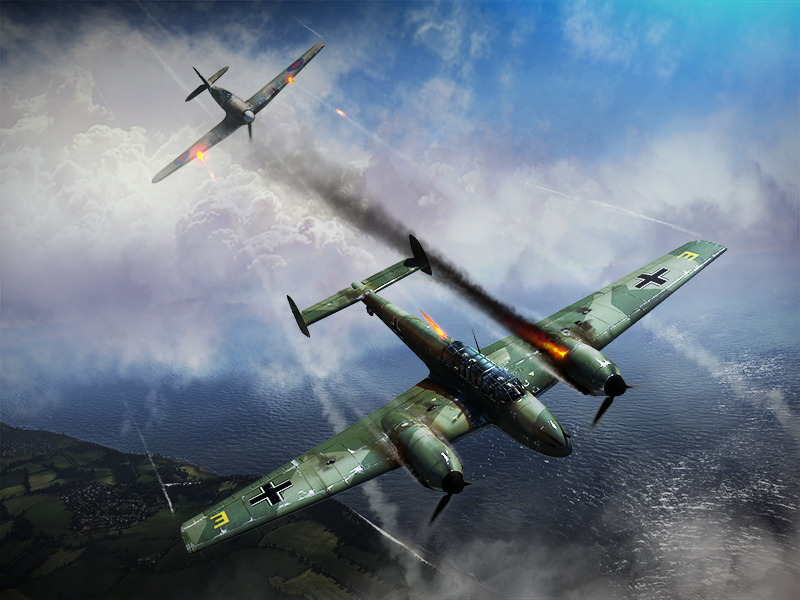
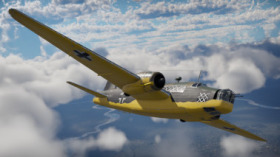
The powerful armament of the Messerschmitt Bf 110 is ideally suited to destroying bombers, as demonstrated in December 1939 over the seas north of Germany. The Messerschmitt Bf 110 C-4 has many strengths. With bomb pylons unlocked it can carry a 500kg bomb load, as much as some dedicated bombers of a similar rank, making it a very useful fighter-bomber. It is one of the fastest aircraft in Rank I, allowing sensible pilots to stay out of trouble - maintain altitude, avoid losing speed in tight turns and you should be able to pick and choose your fights unless up against higher level opposition.
It also has very powerful armament: two 20mm cannon that can be loaded with explosive Minengeschoß shells and four machine guns, all concentrated in the nose. Head-on attacks are always risky but nose-mounted guns give you the best chance of taking out an opponent at long range, open fire from 1.5km (1 mile) and start to evade around 1km (0.6 miles) where many pilots start shooting.
The weakness of the Bf 110 is lack of manoeuvrability. Although slightly better than the Do 17 Z-7 immediately before it in the tree these heavy fighters need a different style of flying to the agile biplanes that new pilots may recently have graduated from. Avoid dogfights, do not try and turn with a lighter fighter. Instead stay at high altitude, line up an enemy and dive down on them making one pass. If they dodge, or you miss, do not turn tightly; keep flying away at high speed until a safe distance away, regain altitude, and repeat the process. This is the essence of "Boom and Zoom", a key technique for German aircraft through the ranks.
The Bf 110 is ideally equipped to tackle the larger bombers and flying boats of Rank I/II such as the PBY Catalina or Wellington. These can be tough targets for fighters equipped only with machine guns, but the cannon of the Bf 110 allow it to live up to its German designation of ‘Zerstörer’ (Destroyer). Lack of manoeuvrability is not an issue against lumbering bombers, though you do need to be careful of defensive fire from turrets; do not stay completely straight and level behind one, even a single light machine gun can be fatal to your pilot.
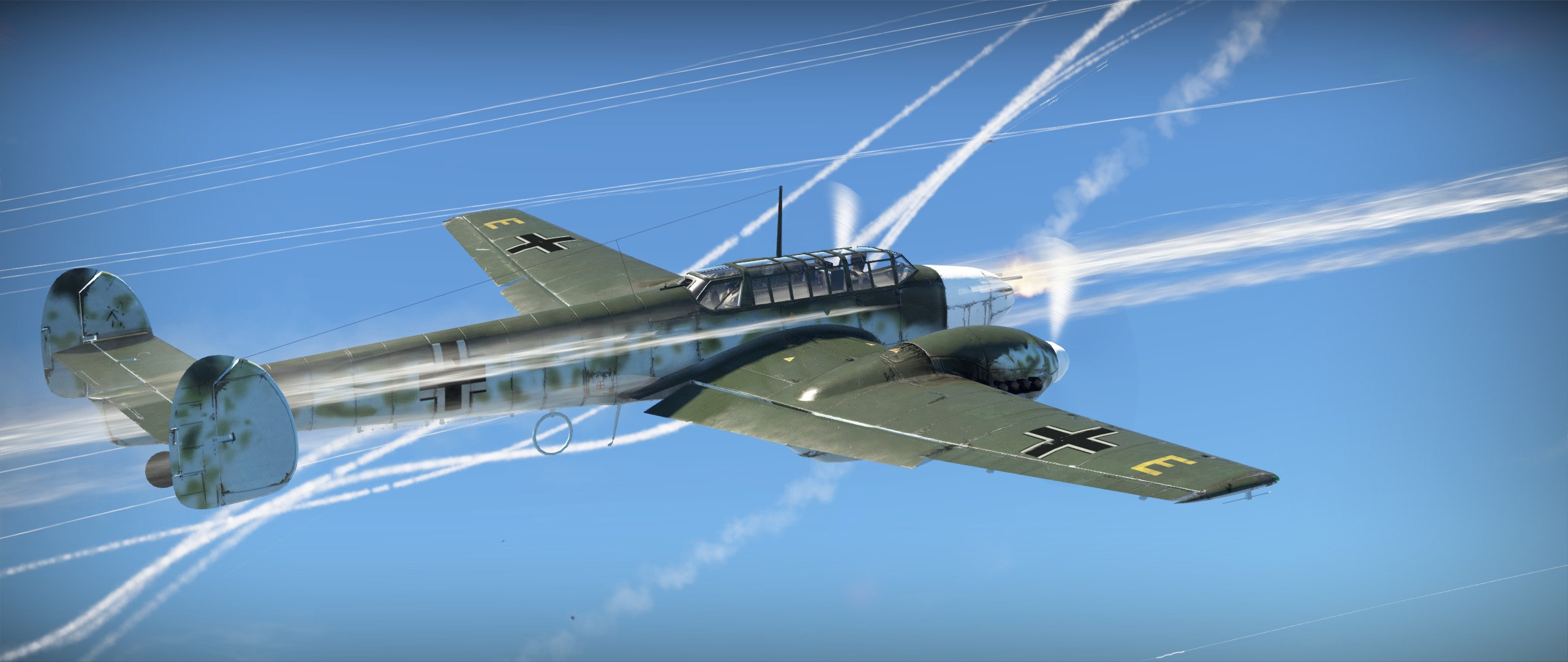
In game it is one of the fastest fighters in Era 1 with a speed of 538 km/h. It packs incredible firepower with 4x 7.92mm MG’s and 2x
20mm cannons with a copious 360 rounds all in a centreline mount, a hard hitting package that will reach out and swat aircraft far away.
The prowess of the Bf 110 as a bomber destroyer was demonstrated in a battle of December 1939 that had a profound impact on RAF strategy for the rest of the war. After the German invasion of Poland in September 1939 there followed several months with little fighting, the so-called "Phoney War". The British launched some desultory bombing attacks against the German Navy with little effect. Defending Luftwaffe squadrons, equipped with early-mark Bf 109s at the start of the war, had some success, but the RAF believed that the concentrated defensive fire from a tight formation of bombers was sufficient drive off enemy fighters.
PROS AND CONS OF THE PLANE:
|
|
I./ZG 76, a veteran Bf 110 unit from the Polish campaign, relocated to North Germany near the naval base at Wilhelmshaven on December 17th 1939. The following day the RAF despatched 24 Wellington bombers on another mission against the German Navy. Two had to return to base; the remaining 22 were detected by German radar 70 miles out. The Luftwaffe did not respond immediately as an attack in such clear weather seemed unlikely, but after visual confirmation of the radar reports Bf 109s and 110s scrambled to intercept. One flight of Bf 110s had been out on patrol and had just finished refuelling; pilot Helmut Lent, impatient to get into action and add to the one kill he had scored over Poland, started to take off even as an armourer slid down from his wing having just fitted a new ammunition drum.
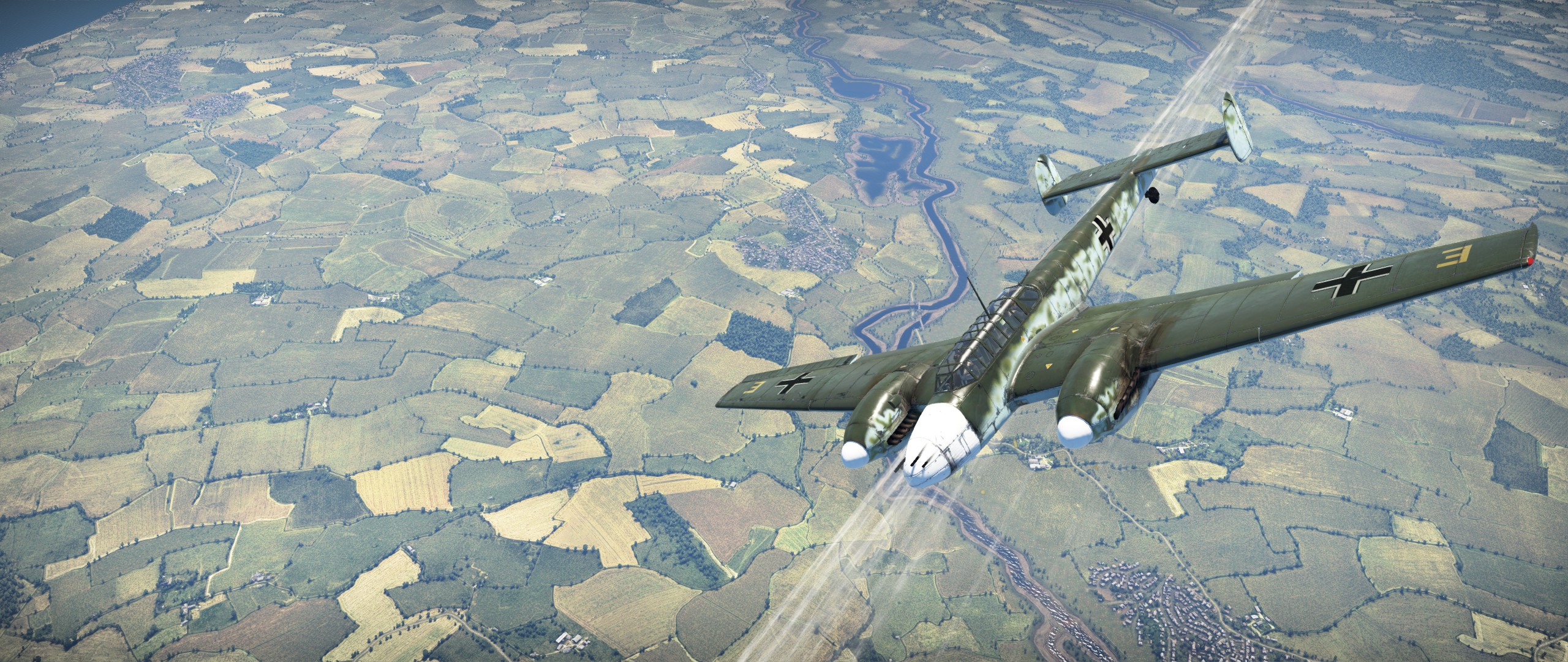
Visit official War Thunder wiki for more information about this German Attacker.
The Wellingtons reached Wilhelmshaven but were unable to attack their primary targets - they were forbidden from bombing ships moored quayside for fear of civilian casualties. Under heavy anti-aircraft fire, including the batteries of the Scharnhorst and Gneisenau, the formation started to break up. As the bombers turned for home and the flak barrage died down the Messerschmitts pounced. For the next half hour over 40 German fighters mounted a prolonged attack on the Wellingtons, the greater endurance of the Bf 110s allowing them to sustain the attack the longest. Twelve Wellingtons were shot down, six more were damaged. They accounted for three Bf 109s in return; no Bf 110s were lost, though several suffered varying degrees of damage - Wolfgang Falck, having claimed two Wellingtons (one later confirmed) made a forced landing with one engine knocked out, prompting him to comment afterwards that it was his first and last time as a glider pilot. Both sides overclaimed heavily, as is inevitable in large, confusing aerial battles where aircraft are engaged by multiple opponents. British gunners claimed 12 fighters shot down and another 12 heavily damaged; German pilots claimed 38 victories, with 27 being confirmed.
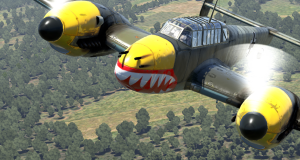
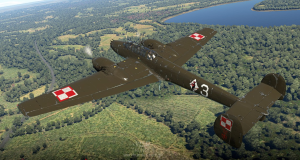
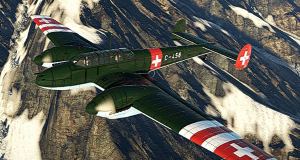
DISCOVER THE LIVE SITE - SKINS FOR BF 110
 |
 |
 |
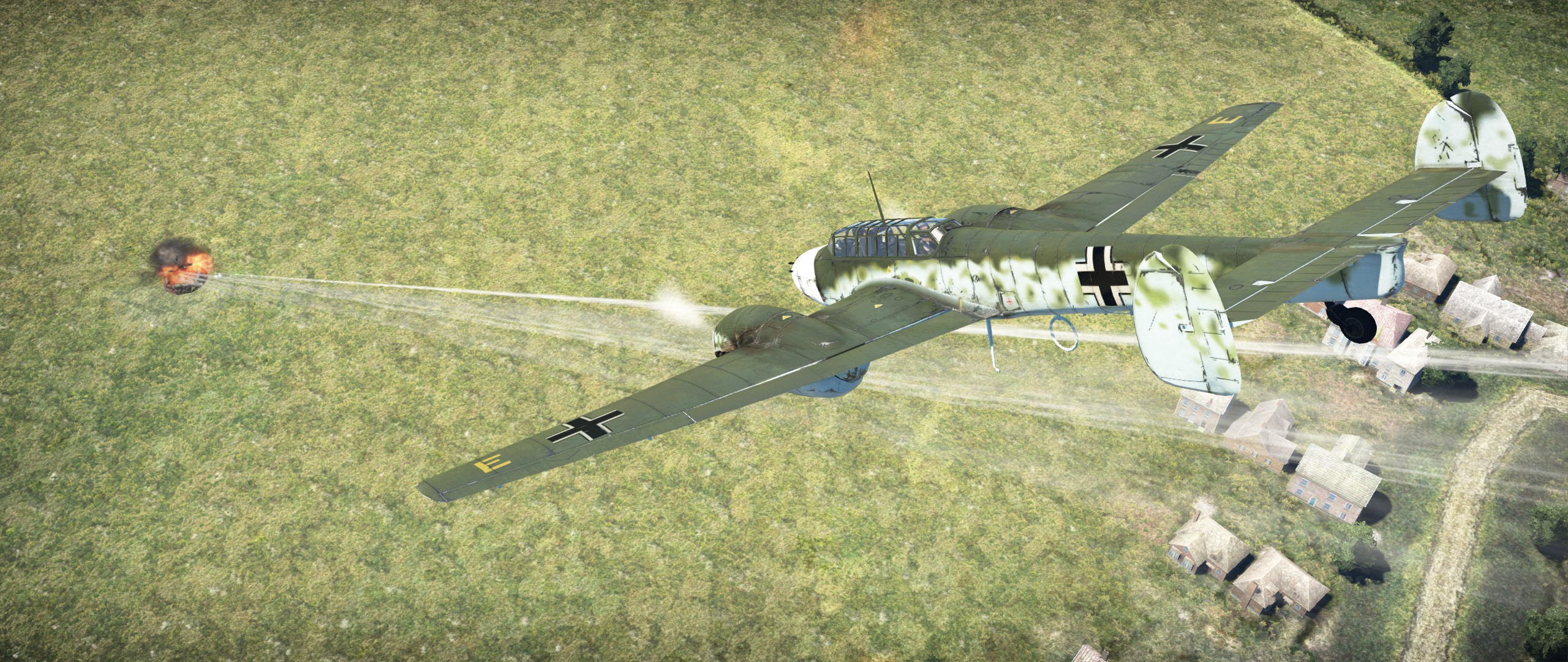
Named the “Zerstörer” (“Destroyer” in English), a very appropriate name for its mission, to destroy anything that is in front of it.
The losses sustained in what became known as The Battle of the Heligoland Bight were a substantial factor in convincing the RAF that defensive firepower alone could not protect bombers; from 1940 until the end of the war the vast majority of Bomber Command operations were conducted at night. The Battle of Britain demonstrated the vulnerability of the Bf 110 to modern single-engine fighters, especially when closely tied to bombers as an escort, but it remained a formidable defensive weapon. The Bf 110 formed the backbone of German night fighter units created as a result of Bomber Command's switch to night operations. The first, NJG 1, was commanded by Wolfgang Falck who became known as the "Father of the Night Fighters". One of his pilots was another veteran of Heligoland, Helmut Lent (three Wellingtons claimed, two confirmed), who went on to become one of the most successful Luftwaffe night fighter pilot with 110 total victories.
Author: John "Zoso" Moore
Want to read more about the vehicles in War Thunder? Find other Vehicle Profiles on our website!

Комментарии (0)
Отправить жалобу